
You brush your teeth every day. You probably use toothpaste, maybe mouthwash, and you may even floss from time to time.
So why are your gums still bleeding? Why does your breath seem to turn unpleasant a few hours after brushing? And why do your teeth suddenly feel sensitive when you drink something cold?
Here is the uncomfortable truth: having an oral hygiene routine does not necessarily mean you have a good oral hygiene routine.
Sometimes, the problem is not that you are doing nothing. It is that the routine you have been following is no longer doing enough—or you are missing a few important steps.
The good news is that many everyday oral-health problems can be addressed by improving basic habits. Regular brushing, cleaning between the teeth, limiting added sugar, and getting professional dental care when needed are still the foundation of good oral health.
But how do you know when your routine needs an upgrade?
Your mouth usually gives you clues.
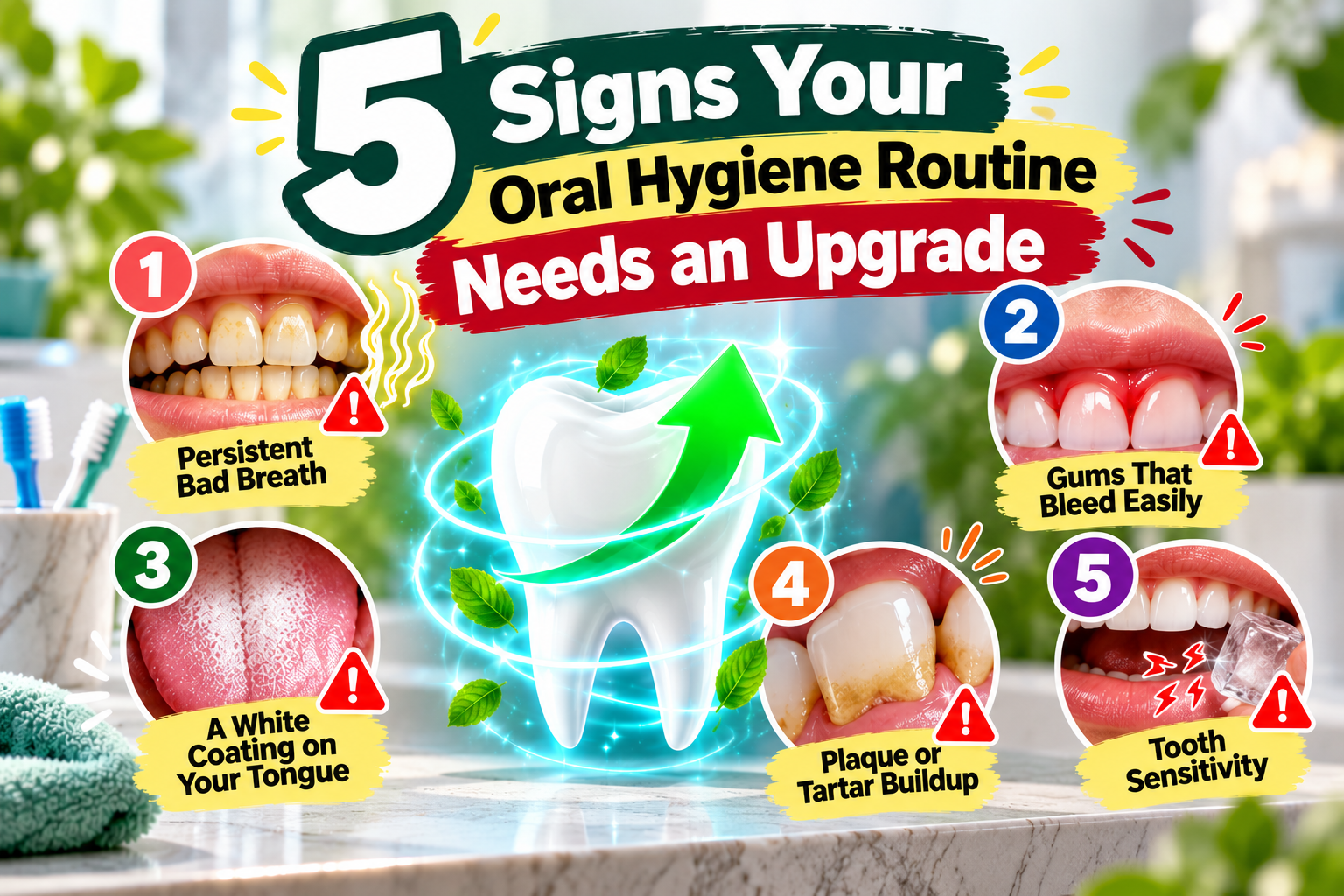
Here are 5 signs your oral hygiene routine may need some attention, along with practical steps you can take.
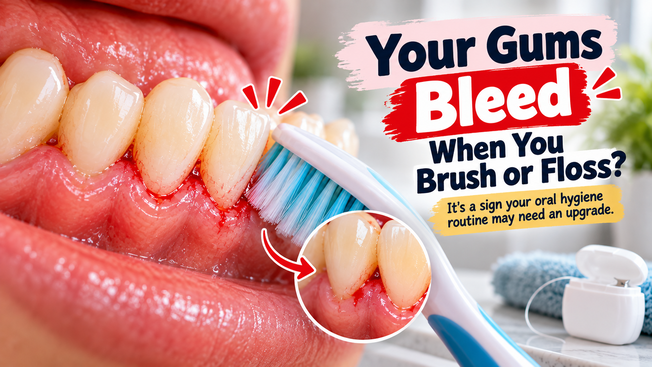
1. Your Gums Bleed When You Brush or Floss
Let’s start with one of the most commonly ignored warning signs.
You are brushing your teeth and notice a little pink or red in the sink.
You might think, “I probably brushed too hard.”
Maybe.
But if your gums bleed regularly, it is worth paying attention.
Healthy gums should not routinely bleed simply because you are brushing or cleaning between your teeth. Red, swollen, tender, or bleeding gums can be signs of gum inflammation, including gingivitis.
And no, stopping flossing because your gums bleed is usually not the solution.
If plaque is accumulating around the gumline and between the teeth, those areas need proper cleaning. The key is to be gentle and consistent rather than attacking your gums with excessive pressure.
What you can do
Start with the basics:
- Brush twice a day with fluoride toothpaste.
- Clean between your teeth every day using floss or another suitable interdental cleaner.
- Use gentle pressure rather than aggressively scrubbing.
- Pay attention to the gumline, not just the visible surfaces of your teeth.
- Replace your toothbrush when the bristles become worn.
- Consider a dental checkup if bleeding continues.
Gum disease can progress without dramatic pain, which is one reason regular dental examinations matter.
The important takeaway
Bleeding gums are not something you should simply accept as normal.
If it keeps happening, your mouth may be telling you that your current routine needs more attention.
2. Your Breath Smells Bad Again Soon After Brushing
Few things are more frustrating than brushing your teeth, using mouthwash, and then noticing that your breath is unpleasant again later.
You brush.
You rinse.
You chew gum.
And somehow… the problem comes back.
If this sounds familiar, constantly adding stronger breath mints may not solve the underlying issue.
Bad breath can have different causes, and oral hygiene is an important part of the picture. Bacteria, plaque, food debris, gum problems, dry mouth, diet, and other conditions can all contribute to unpleasant breath.
This is where many people make the same mistake: they try to cover up the smell instead of figuring out why it keeps returning.
What you can do
First, make sure you are actually cleaning the areas where bacteria and food debris can accumulate.
Brush your teeth thoroughly twice a day and clean between your teeth daily. Don’t forget your tongue, either. The tongue can collect debris and microorganisms, so gently cleaning it can be a useful addition to your routine.
Also pay attention to hydration. A dry mouth can make your mouth feel less comfortable and can contribute to unpleasant breath.
And if your breath remains persistently unpleasant despite good daily care, don’t keep buying stronger mints and hoping for the best.
Ask a dentist about it.
Persistent bad breath can sometimes be associated with dental or other health issues that need professional attention.
A simple test
Ask yourself: “If I stopped using gum, mints and mouthwash for a day, would the problem still be there?”
If the answer is yes, your routine may need to focus more on the underlying oral environment rather than simply making your breath smell minty for a few hours.
Want to try a chewable oral probiotic? Check out ProDentim Review to find out more.
Read ProDentim Review3. Your Teeth Feel Fuzzy Even After Brushing
Have you ever run your tongue across your teeth and thought:
“Why do they still feel dirty?”
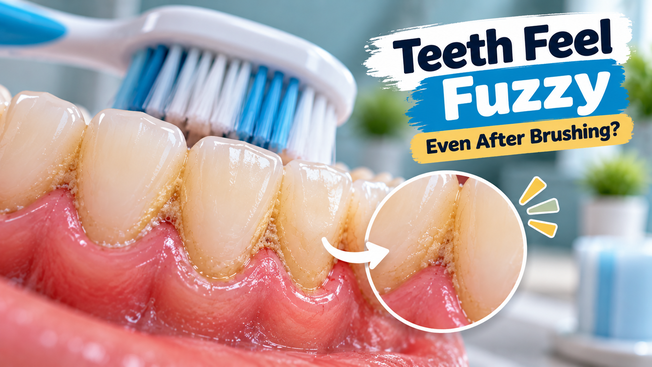
That slightly sticky or fuzzy feeling can be a sign that plaque is building up.
Plaque is not just something that makes your teeth feel unpleasant. If it is not regularly removed, it can contribute to tooth decay and gum problems.
And here is where brushing technique matters.
You can brush your teeth every morning and night and still miss important areas.
For example, some people concentrate almost entirely on the front surfaces of their teeth because those are the parts they can see in the mirror.
Meanwhile, the gumline and spaces between the teeth receive far less attention.
What you can do
Instead of thinking:
“I brushed, so I’m done.”
Think: “Did I clean all the areas where plaque can hide?”
Take your time.
Angle the toothbrush toward the gumline and gently clean the outer, inner and chewing surfaces of your teeth. Then clean between your teeth separately.
Remember, brushing and flossing are not competing techniques. They do different jobs.
The CDC recommends brushing twice daily and flossing daily to help remove dental plaque.
Another thing to consider
If your teeth constantly feel coated despite careful brushing, don’t automatically assume that you need a more aggressive toothpaste.
Sometimes better technique and consistency beat a more complicated collection of products.
Your bathroom cabinet does not need to look like a dental clinic.
It needs to support a routine you can actually maintain.
Ready to dive deeper into your daily wellness habits?
Read How to Improve Oral Microbiome Naturally4. Cold Drinks Make Your Teeth Say “No Thanks”
You take a sip of cold water, iced coffee or a cold drink.
Suddenly—
Ouch.
That quick, sharp sensation can be extremely annoying.
Tooth sensitivity can have several causes, including worn enamel, exposed tooth surfaces, gum recession, cavities or other dental problems. So sensitivity should not automatically be dismissed as simply having “weak teeth.”
This is particularly important if the sensitivity is new, getting worse, happens frequently, or affects only one tooth.
What you can do
Start by avoiding aggressive brushing.
More pressure does not mean cleaner teeth.
In fact, brushing too hard can irritate your gums and potentially contribute to problems affecting exposed tooth surfaces.
Use a soft-bristled toothbrush and gentle movements.
You can also discuss toothpaste designed for sensitive teeth with your dentist or dental professional.
But don’t try to diagnose the cause yourself if sensitivity persists.
A sensitive tooth can sometimes be giving you a much bigger clue.
When should you pay more attention?
If sensitivity is accompanied by:
- Persistent tooth pain
- Swelling
- Pain when chewing
- A broken or damaged tooth
- Significant gum recession
- Sensitivity that keeps getting worse
…it is time to stop experimenting with home remedies and get professional advice.
The CDC lists sensitive or loose teeth, painful chewing, and changes in the gums among symptoms associated with gum disease.
Sensitivity is information. Don’t ignore it.
5. You Keep Adding More Oral-Care Products, But Your Mouth Isn’t Improving
This one is easy to overlook.
Your bathroom shelf is full.
Toothpaste? Yes.
Mouthwash? Yes.
Floss? Somewhere.
Tongue scraper? Maybe.
Whitening product? Definitely.
Special rinse? Of course.
And yet your gums still don’t feel right.
This is where an oral hygiene routine can become unnecessarily complicated.
The answer isn’t always another product.
Sometimes the missing ingredient is simply consistency.
A basic routine done correctly every day is more useful than an elaborate routine you follow for three days and abandon.
The foundation remains simple:
Brush twice daily. Clean between your teeth daily. Limit excessive added sugar. Drink water. Don’t smoke or use tobacco. Have regular dental checkups.
Once those fundamentals are in place, you can think about whether additional products make sense for your particular needs.
What About the Oral Microbiome?
Here is where oral care gets particularly interesting.
Your mouth is not supposed to be completely free of bacteria.
It naturally contains a community of microorganisms, and researchers have become increasingly interested in how the balance of these microorganisms may relate to oral health.
That has led to growing interest in oral probiotics.
The idea is different from simply brushing away plaque or using a mouthwash. Instead, oral probiotic products are designed to introduce selected beneficial microorganisms as part of an overall oral-care routine.
However, there is an important distinction worth making:
An oral probiotic is not a replacement for brushing, flossing or professional dental care.
Evidence can vary depending on the specific probiotic strain, dose, delivery method and outcome being studied. So it is better to think of these products as a potential addition to a good routine—not a magic solution for dental problems.
For example, ProvaDent currently describes itself as a daily oral-wellness formula containing four probiotic strains along with ingredients including xylitol, cranberry extract, purple carrot powder and its BioFresh™ Clean Complex.
ProDentim is another oral probiotic product marketed around oral microbiome support. Its current product materials describe a chewable formula containing probiotic strains including Lactobacillus paracasei, Lactobacillus reuteri and Bifidobacterium lactis BL-04, along with ingredients such as inulin and tricalcium phosphate.
If you are considering either product, it is worth looking at the actual ingredients, dosage, evidence behind the individual strains and—most importantly—how the product fits into your existing dental routine.
Curious how the top options stack up against each other?
Check out ProvaDent vs ProDentim – Which One Is Right for You?So, Does Your Oral Hygiene Routine Need an Upgrade?
Let’s go back to the five signs.
Bleeding gums.
Bad breath that keeps returning.
Teeth that still feel fuzzy after brushing.
Sensitivity to cold foods and drinks.
A bathroom cabinet full of products without much improvement.
If one or more of these sounds familiar, don’t panic.
It doesn’t automatically mean that something is seriously wrong.
But it does mean your mouth deserves more attention.
Start with the fundamentals. Improve your brushing technique. Clean between your teeth every day. Pay attention to your gums. Reduce excessive sugar. Stay hydrated. And don’t ignore symptoms that persist or become worse.
Most importantly, don’t use supplements or mouthwash as a substitute for professional dental care.
Sometimes the best “upgrade” isn’t a new product at all.
It is finally fixing the part of your routine you’ve been skipping.
And if you already have the basics covered but are interested in going one step further, oral probiotics such as ProvaDent and ProDentim are worth researching to see which approach, ingredients and formulation fit your needs.
I’ve put more information about both products below so you can compare them for yourself and decide whether either one deserves a place in your daily oral-care routine.
Your next step doesn’t have to be complicated. It just needs to be the right one.
Are you a woman 40+ looking for supplements to support your daily wellness?
Discover expert recommendations tailored for your lifestyle needs.
Check out EasyFitShape