

There is something incredibly frustrating about feeling as though your bladder is making decisions for you. Maybe you avoid drinking water before leaving home, look for the nearest restroom whenever you enter a store, or worry about laughing too hard because of an unexpected leak.
For many women, these situations become part of everyday life, especially after pregnancy, childbirth, or menopause. Yet bladder problems are rarely discussed as openly as other women’s health concerns.
Key Insight: FemiCore for bladder control is attracting interest as a daily formula designed to support urinary wellness, bladder comfort, and a balanced feminine microbiome.
This is one reason supplements such as FemiCore for bladder control are attracting interest. FemiCore is marketed as a daily formula designed to support urinary wellness, bladder comfort, and a balanced feminine microbiome.
But can a supplement genuinely make a difference? And what should women know before trying one?
To answer those questions, we need to understand why bladder problems happen, how FemiCore is intended to work, and what medical research actually supports.
Bladder Control Problems Are More Common Than Many Women Realize
If you experience occasional bladder leakage or sudden urinary urgency, you are certainly not alone.
According to the National Institute of Diabetes and Digestive and Kidney Diseases (NIDDK), approximately half of all women experience urinary incontinence at some point.
However, the percentage depends on how researchers define and measure the condition.
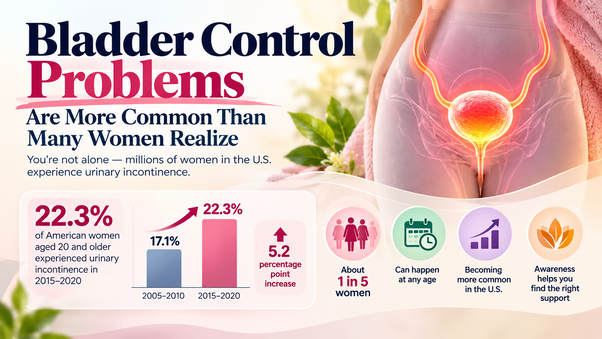
A study using data from the National Health and Nutrition Examination Survey (NHANES) found that 22.3% of American women aged 20 and older experienced symptomatic urinary incontinence during 2015–2020, compared with 17.1% in 2005–2010.
That represents an increase of 5.2 percentage points.
Researchers suggest that population aging, increasing obesity rates, and other health conditions may contribute to the growing burden.
How Bladder Problems Are Increasing Among US Women
| Research Finding | Percentage |
|---|---|
| Symptomatic urinary incontinence, 2005–2010 | 17.1% |
| Symptomatic urinary incontinence, 2015–2020 | 22.3% |
| Overactive bladder, 2005–2006 | 18.7% |
| Overactive bladder, 2017–2020 | 22.1% |
| Women aged 65+ experiencing urinary incontinence | More than 40% |
These figures come from different studies and definitions, so they should not be treated as interchangeable.
A separate study of overactive bladder found that its prevalence increased from 18.7% to 22.1% across the periods examined.
These numbers reveal an important reality: urinary symptoms are widespread, and many women need better information about managing them.
The encouraging part is that bladder problems can often be improved with appropriate treatment, lifestyle adjustments, and professional guidance.
Why Do Women Experience Bladder Control Problems?
Before considering FemiCore for bladder control, it helps to understand what may be causing your symptoms.
The female urinary system consists of the kidneys, ureters, bladder, and urethra. These organs work together to filter waste, store urine, and release it when appropriate.
The pelvic floor muscles and surrounding nerves also play essential roles.
When this system is disrupted, several types of symptoms can appear.
Pregnancy and Childbirth
Pregnancy places additional pressure on the bladder and pelvic floor. Childbirth can also stretch or injure the muscles and tissues responsible for urinary control.
Some women recover naturally, while others continue experiencing leakage long after delivery.
Menopause and Hormonal Changes
Estrogen levels decline during menopause, affecting tissues around the urethra and vagina.
These changes may contribute to urinary urgency, discomfort, or recurrent infections in some women.
However, menopause-related urinary symptoms can have several causes and should not automatically be attributed to hormones alone.
Weak Pelvic Floor Muscles
The pelvic floor supports the bladder and helps control urine release.
When these muscles become weakened, everyday activities such as coughing, sneezing, jumping, or exercising may trigger leakage.
This is commonly known as stress urinary incontinence.
Overactive Bladder
Overactive bladder involves sudden urinary urgency, sometimes accompanied by frequent urination, nighttime bathroom visits, or urge-related leakage.
Unlike stress incontinence, it is not necessarily caused by weak pelvic floor muscles.
Note: Understanding these differences matters because no single supplement or treatment is appropriate for every bladder condition.
What Is FemiCore for Bladder Control?
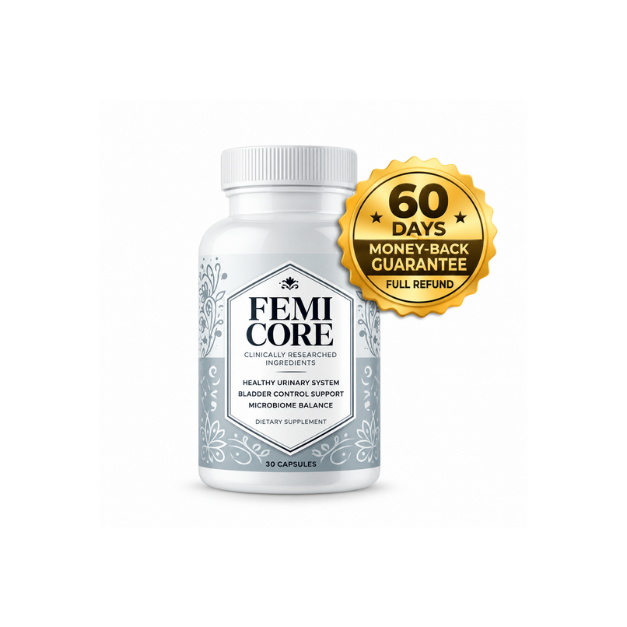
FemiCore is a dietary supplement developed and marketed for women seeking additional support for urinary wellness.
Its formula combines botanical extracts with probiotic bacteria.
Rather than functioning as a medication that directly changes bladder muscle activity, FemiCore is promoted around the concept of supporting a healthier urinary environment and maintaining microbial balance.
Its published ingredients include cranberry extract, bearberry leaf, berberine, Mimosa pudica, and five Lactobacillus probiotic strains.
These ingredients have different biological properties, and some have been investigated in studies involving urinary or microbial health.
However, FemiCore is not an FDA-approved treatment for urinary incontinence, and the effectiveness of its complete formula has not been established through convincing product-specific clinical trials.
That distinction is important for women deciding whether it deserves a place in their wellness routine.
How Is FemiCore Supposed to Work for Urinary Wellness?
The idea behind FemiCore for bladder control involves two areas: botanical ingredients and microbiome support.
1. Supporting a Healthy Urinary Environment
Certain botanical ingredients have been studied for their potential effects on bacteria associated with urinary tract health.
Cranberry, for example, contains proanthocyanidins, compounds that may make it more difficult for certain bacteria to attach to urinary tract surfaces.
This mechanism is relevant to research on recurrent urinary tract infections.
However, preventing bacterial attachment is different from strengthening pelvic floor muscles or treating overactive bladder.
Therefore, cranberry’s potential urinary-health benefits should not be interpreted as proof that FemiCore prevents bladder leakage.
2. Supporting Microbiome Balance
The human body contains communities of microorganisms, including bacteria that play roles in normal health.
Lactobacillus species are commonly associated with healthy vaginal microbial environments.
Researchers are investigating whether certain probiotic strains may influence urinary and vaginal wellness.
FemiCore includes five Lactobacillus strains, but evidence supporting one probiotic strain does not automatically apply to another.
There is currently insufficient evidence that FemiCore’s particular probiotic combination improves urinary incontinence.
3. Combining Botanical and Probiotic Ingredients
FemiCore’s marketing presents its ingredients as a complementary blend intended to support overall urinary wellness.
This is a reasonable concept to investigate scientifically, but combining ingredients does not guarantee that they work better together.
Without well-designed clinical trials, it remains uncertain whether the complete formula produces measurable improvements in bladder control.
Understanding the Ingredients in FemiCore
For women considering FemiCore for bladder control, understanding the ingredients is more useful than relying on promotional promises.
Cranberry Extract
Cranberry is one of the most familiar natural ingredients associated with urinary wellness.
Research suggests certain cranberry products may reduce recurrent UTIs in selected populations, including women with a history of recurrent infections.
However, cranberry supplements are not established treatments for urinary incontinence or active urinary infections.
Bearberry Leaf
Bearberry, also known as uva ursi, has a long history of traditional use for urinary complaints.
Its compounds have attracted scientific interest, but evidence supporting regular long-term use is limited.
Bearberry also raises safety concerns, particularly during pregnancy or with prolonged use.
Berberine
Berberine is a plant-derived compound investigated for metabolic and antimicrobial effects.
Although laboratory studies suggest biological activity, this does not establish that berberine improves urinary urgency or bladder leakage.
It may also interact with medications.
Mimosa Pudica
Mimosa pudica is a botanical ingredient included in various wellness formulas.
Some preliminary research has explored its biological properties, but there is insufficient human evidence supporting its effectiveness for bladder control.
Lactobacillus Probiotics
FemiCore contains several Lactobacillus strains intended to complement its botanical ingredients.
Probiotics may influence microbial communities, but their effects depend on the specific strain, viable dose, and health condition being studied.
One limitation of FemiCore’s published label is that the probiotic blend is listed by weight without a clearly disclosed colony-forming unit count.
The herbal blend also does not provide individual ingredient quantities.
These gaps make it difficult to compare the formula directly with doses used in clinical research.

Can FemiCore Really Improve Bladder Control?
This is probably the most important question for anyone considering the supplement.
The answer is that FemiCore’s effectiveness for reducing urinary incontinence has not been convincingly demonstrated.
Some ingredients have research supporting particular biological effects, but those findings cannot be assumed to apply to the finished product.
The American Urological Association’s guideline for overactive bladder states that evidence is insufficient to support nutraceuticals, vitamins, supplements, or herbal remedies as established treatments.
That does not mean every supplement is necessarily ineffective.
It means there is not enough reliable clinical evidence to recommend them as proven treatments.
Women considering FemiCore should therefore view it as an optional supplement with uncertain benefits, not a replacement for established bladder-control care.
Why Bladder Health Matters Beyond Bathroom Visits
Urinary wellness affects much more than how frequently someone uses the restroom.
Women experiencing persistent urgency or leakage may find themselves changing everyday routines to avoid embarrassing situations.
Sleep and Energy
Repeated nighttime bathroom visits can interrupt sleep and leave women feeling exhausted the following morning.
Poor sleep can affect concentration, mood, and overall well-being.
Social Confidence
Some women avoid long journeys, exercise classes, shopping trips, or social gatherings because they worry about finding a restroom.
These restrictions can gradually affect confidence and independence.
Physical Activity
Fear of leakage may discourage women from walking, running, dancing, or participating in other activities they enjoy.
Unfortunately, avoiding physical activity can also make maintaining a healthy weight more difficult.
Emotional Well-Being
Persistent urinary symptoms can cause frustration, embarrassment, and anxiety.
These experiences deserve attention rather than dismissal.
A woman should never feel that she simply has to accept bladder leakage because she is getting older.
Practical Ways Women Can Improve Bladder Control
Whether or not you decide to try FemiCore for bladder control, several evidence-based strategies deserve attention.
1. Strengthen or Rehabilitate Your Pelvic Floor
Pelvic floor muscle training can help women experiencing certain forms of urinary incontinence, especially stress incontinence.
However, not everyone needs more strengthening. Some women have overly tight pelvic floor muscles and may benefit from relaxation-focused therapy instead.
A pelvic floor physical therapist can help identify the appropriate approach.
2. Practice Bladder Training
Bladder training involves gradually adjusting bathroom habits to improve control over urinary urgency.
For women with overactive bladder, this may include scheduled bathroom visits and carefully increasing the time between them.
Professional guidance can make the process more effective.
3. Review Your Caffeine Intake
Coffee, tea, energy drinks, and certain soft drinks may aggravate urgency in some women.
You do not necessarily need to eliminate caffeine completely.
Try observing whether reducing your intake changes your symptoms.
4. Maintain a Healthy Weight
Excess body weight can increase pressure on the bladder and pelvic floor.
For women with overweight or obesity, gradual weight management may improve urinary symptoms.
5. Stay Properly Hydrated
Some women deliberately avoid water because they fear frequent bathroom visits.
However, excessive fluid restriction can cause dehydration and concentrated urine, potentially worsening irritation.
Drink appropriate amounts throughout the day rather than drastically reducing fluids.
6. Address Constipation
Chronic constipation can increase pressure on pelvic structures and worsen urinary symptoms.
Adequate fiber, hydration, and regular physical activity may help.
These strategies offer a stronger foundation for bladder health than relying on supplements alone.
Why Are Women Interested in FemiCore?
The growing interest in supplements such as FemiCore is understandable.
Many women want convenient, noninvasive ways to support their health. Others may prefer exploring nutritional products before considering medication.
FemiCore’s combination of familiar botanical ingredients and probiotics may appeal to women interested in microbiome-focused wellness.
However, interest in a product should not be confused with evidence that women trust it or experience consistent results.
Independent, verified customer outcome data are needed before making claims about widespread satisfaction or effectiveness.
If you are considering FemiCore, ask yourself whether you understand its ingredients, whether its advertised benefits match your actual symptoms, and whether you are comfortable with the uncertainty surrounding its effectiveness.
Who Should Be Cautious About Taking FemiCore?
FemiCore may not be appropriate for everyone.
Women who are pregnant, breastfeeding, taking prescription medications, or managing kidney, liver, or other chronic conditions should consult a qualified healthcare professional before considering the supplement.
Anyone experiencing burning urination, blood in the urine, or persistent pelvic discomfort should seek medical evaluation.
Fever, chills, or back and side pain alongside urinary symptoms require urgent assessment because they may indicate a kidney infection.
FemiCore should never be used as a substitute for treating an active urinary tract infection.
Frequently Asked Questions About FemiCore for Bladder Control
Does FemiCore stop bladder leakage?
There is insufficient clinical evidence to establish that FemiCore stops bladder leakage. The appropriate treatment depends on whether symptoms involve stress incontinence, urgency incontinence, or another condition.
Can women over 40 use FemiCore?
FemiCore is marketed toward adult women, including those experiencing urinary concerns later in life. However, age alone does not determine whether the product is safe or suitable.
How long does FemiCore take to work?
No reliable, clinically established timeframe exists for FemiCore improving bladder control. Promotional timelines should not be treated as guaranteed results.
Is FemiCore better than pelvic floor exercises?
There is substantially stronger clinical evidence supporting appropriately prescribed pelvic floor muscle training for certain types of urinary incontinence than there is for FemiCore.
Can FemiCore prevent urinary tract infections?
There is insufficient product-specific evidence showing that FemiCore prevents UTIs. Some cranberry products have evidence for reducing recurrent infections in selected groups, but those findings cannot automatically be applied to FemiCore.
Final Thoughts: Is FemiCore for Bladder Control Worth Considering?
Living with bladder control problems can be exhausting, particularly when symptoms begin affecting sleep, relationships, confidence, and everyday activities.
The good news is that women have more options than simply accepting these problems as part of aging.
FemiCore for bladder control is marketed as a supplement combining botanical extracts and probiotics to support urinary wellness and microbiome balance.
While some of its ingredients have been investigated for urinary-related benefits, there is not enough product-specific clinical evidence to conclude that FemiCore reliably reduces bladder leakage or treats overactive bladder.
For women interested in supplements, reviewing ingredient safety, transparent labeling, and realistic expectations is essential.
More importantly, identifying the cause of urinary symptoms and considering proven approaches such as bladder training, pelvic floor therapy, and appropriate medical treatment can make a meaningful difference.
At EasyFitShape, we believe women’s wellness begins with understanding the body, asking the right questions, and choosing solutions supported by reliable information.
FemiCore may be an option some women wish to discuss with their healthcare professional, but it should complement—not replace—an evidence-based approach to urinary health.