

The FemiCore ingredients combine botanical extracts and probiotic bacteria in a supplement marketed for women’s urinary wellness. But are these ingredients supported by scientific research, and does the formula provide enough information about dosage and safety? This guide examines the nine ingredients described in available product information, their potential benefits, and the limitations consumers should understand before buying.
FemiCore is marketed as a women’s bladder and urinary wellness supplement. Its formula brings together botanical extracts and probiotic bacteria, two ingredient groups often discussed in connection with urinary tract health and the female microbiome.
But what makes these ingredients relevant? Are they supported by research? And does combining them in one supplement necessarily produce better results?
This guide examines the FemiCore ingredients individually, explains their intended roles, and separates established research from claims that still need stronger evidence.
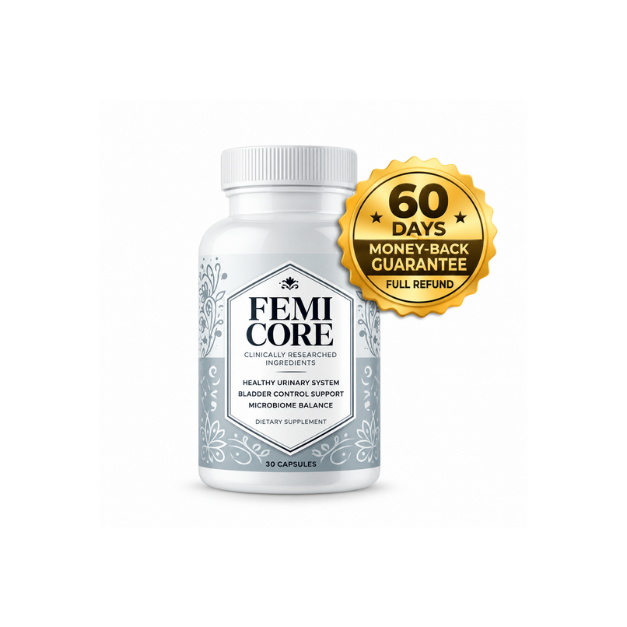
What Is FemiCore and How Is Its Formula Designed?
FemiCore is a dietary supplement promoted for women who want to support urinary comfort, bladder wellness, and a balanced microbiome.
The product is generally described as a once-daily capsule containing two complementary ingredient groups: plant-based extracts traditionally associated with urinary health and Lactobacillus bacteria selected for their potential role in maintaining microbial balance.
The idea behind this combination is understandable. The urinary tract and surrounding tissues are influenced by several factors, including bacterial activity, hormonal changes, and overall health.
However, bladder leakage, urgency, and frequent urination can also result from pelvic floor weakness, overactive bladder, medications, infections, or other medical conditions. A supplement cannot be assumed to address all these causes.
That distinction matters when evaluating the formula.

FemiCore Ingredients: Complete Breakdown
The nine-ingredient version of FemiCore lists four botanical components and five Lactobacillus probiotic species.
| Ingredient | Why it is included | Evidence considerations |
|---|---|---|
| Mimosa pudica | Traditionally used botanical extract | Limited direct human evidence for bladder health |
| Cranberry extract | Contains compounds studied for urinary tract health | Evidence for reducing recurrent UTIs in some groups |
| Bearberry leaf | Traditional urinary-health herb | Limited modern clinical evidence; safety restrictions matter |
| Berberine | Plant compound with antimicrobial and metabolic research | No established clinical benefit for bladder leakage |
| Lactobacillus crispatus | Associated with a healthy vaginal microbiome | Some strain-specific urogenital research |
| Lactobacillus acidophilus | Commonly studied beneficial bacteria | Effects depend on the specific strain |
| Lactobacillus plantarum | Investigated for microbial and digestive health | Limited direct evidence for urinary symptoms |
| Lactobacillus gasseri | Naturally found in some human microbiomes | Urinary benefits remain uncertain |
| Lactobacillus casei | Studied mainly for digestive and immune-related effects | No established benefit for bladder control |
Important label note: Different FemiCore-branded websites display conflicting formulas. One published label description lists a 350 mg herbal blend and a 50 mg probiotic blend, without individual ingredient quantities. Confirm these details against the Supplement Facts panel on the product being purchased.
1. Mimosa Pudica: A Botanical Ingredient with Limited Bladder Research
Mimosa pudica is a tropical plant sometimes called the sensitive plant because its leaves fold inward when touched.
Various parts of the plant have a history of use in traditional herbal practices. Its seeds contain plant compounds and mucilage, a gel-forming substance that attracts interest in botanical supplements.
In FemiCore, mimosa pudica seed extract is presented as part of the formula’s botanical foundation.
What does research suggest?
Laboratory and preliminary research has investigated properties of mimosa pudica, including certain antimicrobial and antioxidant activities.
These findings are interesting, but they don’t establish that taking mimosa pudica improves bladder control or reduces urinary urgency in women.
There is also an important difference between studying a plant extract in a laboratory and demonstrating a meaningful benefit from a specific dose in humans.
For someone considering FemiCore, mimosa pudica should therefore be viewed as an ingredient with traditional use and preliminary scientific interest, rather than a proven solution for urinary symptoms.
2. Cranberry Extract: The Most Recognizable Urinary Health Ingredient
Cranberry is probably the most familiar ingredient in the FemiCore formula.
For years, cranberry juice and supplements have been associated with urinary tract health. Unlike many herbal ingredients, cranberry has also been examined in a substantial number of human clinical trials.
Its main compounds of interest are proanthocyanidins, often abbreviated as PACs.
Certain cranberry PACs can interfere with the ability of some bacteria, particularly specific strains of Escherichia coli (E. coli), to attach to urinary tract surfaces.
This matters because bacterial attachment is one step involved in the development of many urinary tract infections.
Is FemiCore Safe and Worth Considering?
Before deciding, explore FemiCore’s potential benefits, safety concerns, available evidence, and important considerations before buying.
Read the Complete FemiCore Review →What does the evidence show?
A 2023 Cochrane systematic review examined 50 randomized trials involving 8,857 participants. It found that cranberry products may reduce recurrent urinary tract infections in certain populations, including women with recurrent UTIs. This does not establish that FemiCore itself prevents UTIs or treats bladder leakage.
That gives cranberry a stronger research foundation for this specific purpose than many ingredients commonly promoted for urinary wellness.
However, preventing some recurrent infections is not the same as treating an active infection or improving bladder muscle control.
Why the amount matters
One published FemiCore label description identifies cranberry extract standardized to 30% proanthocyanidins.
Standardization can be useful because it indicates the concentration of a particular group of plant compounds.
However, without knowing the amount of cranberry extract in each serving, the percentage alone cannot tell us how much PAC the consumer receives.
This makes it difficult to compare FemiCore directly with the cranberry products used in clinical studies.
The takeaway: Cranberry is a relevant ingredient with meaningful research behind certain urinary tract applications, but the available evidence does not prove that FemiCore itself prevents infections or reduces bladder leakage.
3. Bearberry Leaf: Traditional Urinary Support with Important Precautions
Bearberry, also known as uva ursi, comes from the plant Arctostaphylos uva-ursi.
Its leaves have been used in traditional European herbal medicine for urinary complaints.
The compound most often discussed in bearberry is arbutin, which the body can metabolize into hydroquinone-related compounds.
This traditional use helps explain why bearberry appears in some urinary wellness formulas.
Is bearberry effective?
Despite its history, high-quality clinical evidence supporting bearberry for modern bladder-health concerns remains limited.
It is particularly important not to confuse traditional use for urinary discomfort with proof that the ingredient can prevent recurring infections or improve incontinence.
What about safety?
Bearberry deserves more caution than its natural origin might suggest.
Depending on the preparation and dose, bearberry products may be unsuitable during pregnancy or breastfeeding, and for people with certain kidney or liver conditions.
Long-term use is also a concern because of the herb’s active compounds and limited safety data.
Anyone taking FemiCore regularly should know how much bearberry the formula provides and whether that amount is appropriate for their circumstances.
4. Berberine: A Plant Compound with a Different Research Background
Berberine is a naturally occurring compound found in several plants, including barberry and goldenseal.
It has attracted considerable scientific interest for its effects on glucose metabolism, cholesterol, and certain biological pathways.
Researchers have also studied its antimicrobial properties in laboratory settings.
FemiCore includes berberine as part of its botanical combination, presumably because of its possible relevance to microbial activity.
Can berberine support bladder health?
There is a difference between berberine showing antimicrobial activity under experimental conditions and an oral supplement producing measurable improvements in urinary symptoms.
At present, strong human clinical evidence does not establish berberine as an effective treatment for bladder leakage, urinary urgency, or overactive bladder.
Claims that it directly restores normal bladder muscle function should therefore be approached cautiously.
Potential interactions
Berberine can cause digestive side effects, including nausea, constipation, and diarrhea.
It may also interact with medications, including some drugs used for blood sugar management and other medical conditions.
The National Center for Complementary and Integrative Health advises against berberine use during pregnancy and breastfeeding.
Because FemiCore’s publicly described herbal blend does not clearly disclose the individual berberine dose, consumers have limited information for assessing these risks.
Understanding the Probiotic Ingredients in FemiCore
The other major part of the FemiCore formula consists of Lactobacillus bacteria.
These microorganisms are frequently associated with the digestive and vaginal microbiomes.
In healthy vaginal environments, certain Lactobacillus species help maintain acidity through lactic acid production. This environment can discourage the overgrowth of some undesirable microorganisms.
Scientists are also investigating connections between the vaginal microbiome, urinary tract bacteria, and susceptibility to certain urinary conditions.
This research provides a reasonable explanation for why a women’s wellness supplement might include probiotics.
However, not every Lactobacillus supplement produces the same effects.
A probiotic’s benefits depend on its specific strain, the number of viable organisms, the dose, and the condition being studied.
5. Lactobacillus Crispatus: An Important Species in Vaginal Microbiome Research
Lactobacillus crispatus is one of the better-known bacterial species associated with a healthy vaginal microbiome.
It can help maintain an acidic environment through lactic acid production.
Researchers have investigated certain strains of this species for their potential role in reducing recurrent urinary tract infections.
That makes it a relevant inclusion in a formula aimed at women’s urogenital wellness.
But the research needs to be interpreted carefully.
Some studies have used particular probiotic strains delivered vaginally rather than swallowed in capsules. Results from those preparations cannot automatically be applied to every oral supplement containing the same species.
The presence of L. crispatus in FemiCore is therefore scientifically interesting, but it does not prove that the finished product prevents UTIs or improves bladder control.
6. Lactobacillus Acidophilus: A Familiar Probiotic for Microbial Balance
Lactobacillus acidophilus is commonly found in probiotic supplements and certain fermented foods.
It is best known for its role in digestive and microbial health.
Some strains have also been investigated in women’s vaginal health formulations, often alongside other beneficial bacteria.
Its inclusion in FemiCore fits the product’s emphasis on microbiome support.
Still, the benefits of L. acidophilus are not universal across every strain or health condition.
A study showing that one strain helps with a particular digestive concern does not establish that another strain can reduce nighttime urination.
For this ingredient, the most useful information would be the exact strain identification, its viable count, and research involving that strain.
7. Lactobacillus Plantarum: A Versatile Bacterium Studied for Gut Health
Lactobacillus plantarum, now often classified as Lactiplantibacillus plantarum, is found in various fermented foods and probiotic preparations.
Researchers have studied certain strains for digestive health, intestinal barrier function, and interactions with other microorganisms.
Some strains can produce substances that inhibit the growth of particular bacteria under laboratory conditions.
This may explain why the species appears in multi-strain supplements.
However, its presence does not mean that FemiCore can eliminate harmful urinary bacteria.
Research on digestive or laboratory outcomes should not be presented as direct evidence of bladder-health benefits.
For urinary symptoms, more targeted human studies would be needed.
8. Lactobacillus Gasseri: A Species Associated with Human Microbial Communities
Lactobacillus gasseri naturally occurs in parts of the human body, including the digestive and vaginal environments.
It has been investigated for several health-related applications, depending on the strain.
In FemiCore, the ingredient appears intended to complement the other Lactobacillus species.
The general idea is to provide several types of beneficial bacteria rather than relying on one.
But a greater number of probiotic species does not necessarily produce better results.
There is insufficient direct clinical evidence to conclude that the L. gasseri included in FemiCore reduces bladder contractions, urinary urgency, or leakage.
Its practical value depends on details of the finished formula that are not fully established by the ingredient name alone.
9. Lactobacillus Casei: A Commonly Studied Probiotic Species
Lactobacillus casei, now commonly classified as Lacticaseibacillus casei, is another familiar probiotic organism.
Certain strains have been studied for digestive health and interactions with the immune system.
In multi-strain formulas, it may be included to broaden the range of microorganisms provided.
However, there is no reliable basis for assuming that adding L. casei automatically improves the effectiveness of the other probiotics.
Likewise, its presence does not establish that FemiCore improves urinary control.
The most reasonable interpretation is that it contributes to the product’s general probiotic formulation, while its specific benefit for bladder health remains uncertain.
How Do the FemiCore Ingredients Work Together?
FemiCore is built around the idea of combining botanical compounds with beneficial bacteria.
The botanical ingredients are associated with different aspects of urinary wellness research. Cranberry is particularly relevant to bacterial attachment, while bearberry and berberine have histories of traditional or experimental antimicrobial investigation.
The probiotics are included because of the growing scientific interest in the relationship between microbial balance and urogenital health.
Together, these ingredients create a formula with a recognizable theme.
But there is an important limitation.
Evidence for individual ingredients does not automatically establish the effectiveness of the complete combination.
Ingredients may behave differently when taken together, and their effects depend on the amounts used.
Without well-designed clinical trials testing the finished FemiCore formula, it is not possible to predict how much benefit a particular consumer will experience.
Are the FemiCore Ingredient Dosages Transparent?
This is one of the most important questions for anyone evaluating the supplement.
A published FemiCore label description lists the following amounts:
| Blend | Reported amount |
|---|---|
| Herbal blend | 350 mg |
| Probiotic blend | 50 mg |
These are combined blend amounts, not the quantities of each individual ingredient.
For example, a 350 mg herbal blend does not tell us how much cranberry, bearberry, mimosa pudica, or berberine is included.
The probiotic blend presents another question.
Probiotics are often evaluated using colony-forming units, or CFUs, which estimate the number of viable microorganisms.
A blend weight of 50 mg cannot be converted reliably into a CFU count.
According to the NIH Office of Dietary Supplements, the identity of the probiotic strains and their viable amounts are important when evaluating potential benefits.
For a more complete assessment of FemiCore, the manufacturer should ideally provide individual botanical quantities, verified probiotic CFUs through expiration, and relevant quality-testing information.
Until those details are confirmed, comparisons with clinical study doses remain limited.
Does FemiCore Contain D-Mannose?
This is worth addressing because some FemiCore-branded pages mention D-mannose, while the nine-ingredient formulation described above does not.
D-mannose is a naturally occurring sugar that has been studied for preventing recurrent urinary tract infections.
Its proposed mechanism involves interfering with the attachment of certain bacteria to urinary tract surfaces.
However, a randomized clinical trial published in JAMA Internal Medicine in 2024 studied 598 women with recurrent UTIs and found that daily D-mannose did not significantly reduce medically attended UTIs compared with placebo.
That finding challenges earlier enthusiasm about the ingredient.
More importantly for this article, D-mannose should not be listed as a confirmed FemiCore ingredient unless it appears on the specific product’s verified label.
The same applies to hibiscus and buchu, which appear on some differently worded promotional pages.
Are FemiCore Ingredients Safe?
The formula contains ingredients that have been used in foods, supplements, or traditional herbal products, but that does not guarantee the complete product is safe for everyone.
Probiotics can sometimes cause temporary gas or digestive discomfort. People who are seriously ill or have weakened immune systems may need additional precautions.
Berberine may interact with medications and is unsuitable during pregnancy and breastfeeding.
Bearberry also raises concerns about prolonged use and suitability for people with certain medical conditions.
Consumers should be particularly cautious if they:
- Are pregnant, breastfeeding, or planning pregnancy.
- Take prescription medication, especially for diabetes or other chronic conditions.
- Have kidney or liver disease.
- Experience recurrent urinary infections.
- Have a weakened immune system.
- Are considering using FemiCore for an extended period.
Burning urination, fever, flank pain, or blood in the urine should not be managed by relying on a supplement. These symptoms require appropriate medical evaluation.
Can FemiCore Ingredients Help with Bladder Leakage?
This is where expectations need to be realistic.
Bladder leakage can have several causes.
Stress incontinence, for example, may happen when coughing, laughing, or exercising places pressure on the bladder. Urge incontinence involves a sudden, difficult-to-control need to urinate.
These conditions are not identical to recurrent urinary tract infections.
Although cranberry and certain probiotics have been studied in relation to urinary tract infections or microbial balance, that research does not establish that FemiCore can strengthen pelvic floor muscles or correct overactive bladder.
Treatments such as pelvic floor muscle training, bladder training, and medical assessment may be more directly relevant, depending on the cause of the symptoms.
FemiCore should be considered a supplement marketed for urinary wellness, not a replacement for established incontinence care.
What Should You Check Before Buying FemiCore?
The most useful question is not simply whether the formula contains natural ingredients.
It is whether the product provides enough reliable information to judge its suitability.
Start with the Supplement Facts label. Check the exact ingredient names, serving size, and quantities.
Next, look for details about the probiotic strains and viable counts. A long list of bacteria is less informative than a clearly identified, appropriately dosed formulation.
It is also worth checking whether the manufacturer provides independent testing, allergen information, and clear contact details.
Finally, compare the product’s advertised benefits with the actual research.
An ingredient associated with a healthy microbiome may be relevant to women’s wellness, but that does not necessarily mean it will solve persistent urinary urgency or leakage.
Frequently Asked Questions About FemiCore Ingredients
What are the main ingredients in FemiCore?
The commonly described nine-ingredient formula contains mimosa pudica, cranberry extract, bearberry leaf, berberine, and five Lactobacillus species: crispatus, acidophilus, plantarum, gasseri, and casei. Verify the actual product label because some FemiCore-branded websites list different formulas.
Does FemiCore contain probiotics?
Yes, the nine-ingredient formulation includes five Lactobacillus species. However, the publicly described blend amount does not establish how many viable probiotic organisms are provided per serving.
Which FemiCore ingredient has the strongest urinary health research?
Cranberry has comparatively strong clinical evidence for helping reduce recurrent urinary tract infections in certain groups. This does not establish that FemiCore treats bladder leakage or active infections.
Is FemiCore a cranberry supplement?
Not exactly. Cranberry is one component of a broader formula that also includes other botanical ingredients and probiotics.
Are the ingredients natural?
The listed botanical extracts come from plants, while the probiotics are microorganisms. Natural origin alone does not establish safety, effectiveness, or product quality.
Does FemiCore treat urinary tract infections?
No reliable evidence establishes FemiCore as a treatment for an active UTI. Suspected infections require appropriate medical assessment, and bacterial infections may need prescribed treatment.
Can FemiCore replace bladder-control exercises?
No. Pelvic floor muscle training and other established approaches address certain causes of incontinence more directly than the ingredients in FemiCore have been shown to do.
Final Thoughts: Are the FemiCore Ingredients Worth Considering?
The FemiCore ingredients reflect an interesting approach to women’s urinary wellness.
Cranberry brings research related to recurrent urinary tract infections, while the Lactobacillus species reflect growing scientific interest in the female microbiome. Mimosa pudica, bearberry, and berberine add botanical components, although their direct clinical relevance to bladder control is less established.
The formula’s biggest limitation is not necessarily the selection of ingredients. It is the lack of clearly verified individual doses, probiotic viability information, and convincing product-specific clinical evidence.
For readers considering FemiCore, understanding these limitations is just as important as understanding its potential benefits.
A well-informed decision should be based on the actual Supplement Facts label, personal health needs, medication safety, and realistic expectations—not simply the number of ingredients in the bottle.
For a broader look at the product, including its advertised benefits and purchasing considerations, read our complete FemiCore review on SupplementsSaver.
Research References
- Williams G, et al. (2023). Cranberries for Preventing Urinary Tract Infections . Cochrane Database of Systematic Reviews.
- National Institutes of Health, Office of Dietary Supplements. Probiotics — Health Professional Fact Sheet .
- National Center for Complementary and Integrative Health. In the News: Berberine .
- Hayward G, et al. (2024). D-Mannose for Prevention of Recurrent Urinary Tract Infection Among Women: A Randomized Clinical Trial . JAMA Internal Medicine.
- Health Canada. Licensed Natural Health Product Information: Uva Ursi and Buchu .