

If you have been searching for a Phytomem One review, you probably want to know whether this brain health supplement can genuinely support memory, concentration, and mental clarity—or whether its promises are stronger than the available evidence.
Phytomem One is marketed as a daily cognitive-support supplement containing botanical and marine-derived ingredients. Its advertised formula combines ingredients such as saffron extract, fucoxanthin, berberine HCl, kudzu flower extract, and other compounds associated with antioxidant or metabolic research.
However, there is an important distinction between studying individual ingredients and proving that a finished supplement delivers the same benefits.
In this review, we examine the advertised ingredients, potential benefits, safety concerns, customer feedback, pricing, and the evidence needed to decide whether Phytomem One is worth considering.
Quick verdict
Phytomem One has an interesting ingredient concept, but its marketing claims should not be confused with proven improvements in memory or protection against cognitive decline. Before purchasing, verify the current Supplement Facts label, ingredient amounts, safety information, and refund terms.
What Is Phytomem One?
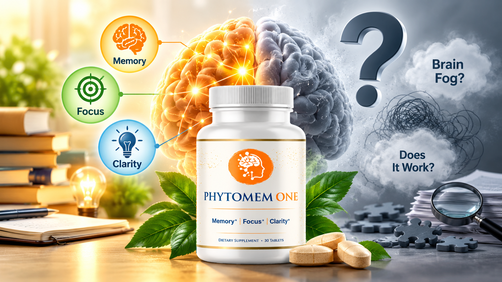
Phytomem One is a dietary supplement marketed to adults interested in supporting memory, focus, and everyday mental clarity. The manufacturer presents it as a multi-ingredient formula intended to support brain health through antioxidant and metabolic pathways.
The product is promoted as a convenient, once-daily supplement rather than a stimulant-based energy product.
According to the product information described in the reviewed article, one bottle contains 30 capsules or tablets, depending on the product presentation, and the advertised serving is one per day. Check the actual packaging because the dosage form and label details should be confirmed before ordering.
What does Phytomem One claim to do?
The product’s marketing focuses on several potential benefits:
- • Supporting everyday memory and recall.
- • Helping maintain concentration and mental clarity.
- • Supporting normal cellular energy metabolism.
- • Providing antioxidant support.
- • Supporting metabolic processes associated with healthy brain function.
These are marketing claims, not established clinical outcomes for Phytomem One itself. The available information reviewed for this article does not establish that the complete formula has demonstrated these benefits in a well-designed human clinical trial.
Phytomem One Ingredients: What Is in the Formula?
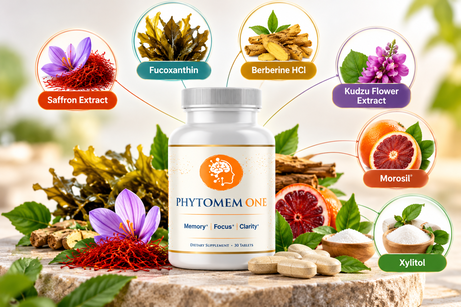
The original review lists saffron extract, fucoxanthin, berberine HCl, kudzu flower extract, Morosil, and xylitol in its product-details table. Its detailed ingredient section discusses the same six components.
Other product-related sources describe a broader ten-ingredient formula that also includes fucoidan, oleuropein, Ceylon cinnamon bark, and corosolic acid from banaba leaf.
This discrepancy matters. A complete and current Supplement Facts label is the best starting point for determining which ingredients are actually included. The ingredient amounts also matter because research results cannot automatically be applied to an unspecified quantity of an ingredient.
1. Saffron extract
Saffron contains compounds that have attracted scientific interest for their potential effects on mood and other aspects of health.
Some human research has investigated saffron preparations in specific clinical contexts. However, findings from a particular saffron extract, dose, and study population do not establish that Phytomem One improves memory or prevents cognitive decline.
What to check: The standardized extract, amount per serving, and any relevant clinical research.
2. Fucoxanthin
Fucoxanthin is a carotenoid found in certain brown seaweeds. Researchers have investigated its antioxidant and metabolic properties, primarily in preclinical and other early-stage research settings.
Those findings do not demonstrate that taking fucoxanthin in Phytomem One improves concentration, repairs damaged neurons, or produces measurable cognitive benefits in humans.
What to check: The actual quantity, source, and human evidence relevant to the claimed benefit.
3. Berberine HCl
Berberine is a plant-derived compound studied for its potential effects on glucose regulation and lipid metabolism.
The National Center for Complementary and Integrative Health discusses research suggesting possible metabolic benefits in some people, while also noting limitations in the evidence and the possibility of medication interactions.
That research is relevant to evaluating the ingredient, but it does not establish berberine as a proven treatment for memory problems or demonstrate that Phytomem One improves brain glucose metabolism.
What to check: The amount of berberine, its intended purpose in the formula, and possible interactions with existing medicines.
4. Kudzu flower extract
Kudzu is a plant containing compounds that have been investigated for various biological effects. However, research on a plant or one of its compounds does not automatically establish a benefit from a specific commercial extract.
The available product information does not establish that the kudzu extract in Phytomem One improves memory, prevents neurological damage, or treats a condition described as type 3 diabetes.
What to check: The extract specification, serving amount, and direct human evidence.
5. Morosil
Morosil is a branded red-orange extract commonly marketed in the context of metabolic health and weight management.
Its inclusion in a supplement does not establish that the finished product supports cognition. Claims about improved brain function require relevant evidence rather than an assumption that metabolic effects translate into better memory.
What to check: The ingredient amount and evidence directly relevant to the product’s advertised purpose.
6. Xylitol
Xylitol is a sugar alcohol used as a sweetener in certain foods and products. It is not established as a standalone memory-enhancing ingredient.
Its presence should not be interpreted as proof that the supplement improves cerebral blood flow, prevents blood sugar spikes in every user, or increases cognitive performance.
What to check: Its function in the formulation and whether the manufacturer substantiates any specific physiological claim.
7. Other ingredients reported in product-related sources
The broader ingredient list includes fucoidan, oleuropein, Ceylon cinnamon bark, and corosolic acid from banaba leaf.
These ingredients have been studied for different biological or metabolic properties. Nevertheless, their presence in a capsule does not establish the effectiveness of the combination.
A meaningful assessment requires the complete label, the quantity of each active ingredient, the quality of the extracts, and evidence relevant to the finished formula.
Does Phytomem One Really Improve Memory and Focus?
This is the most important question in any Phytomem One review.
The product is marketed for mental clarity, memory support, and sustained focus. Yet the evidence needed to substantiate those outcomes is more demanding than showing that certain ingredients have antioxidant or metabolic properties.
Ingredient research is not the same as a product trial
Imagine that a researcher studies a particular botanical extract at a defined dose and observes an effect in a small group of participants.
You cannot automatically assume that another supplement containing that botanical will produce the same result. The extract may differ, the dose may be lower, other ingredients may affect the formulation, and the complete product may never have been tested.
A well-designed clinical trial of Phytomem One itself would provide more relevant evidence than a collection of studies involving unrelated preparations.
For now, the product-specific cognitive benefits remain unverified based on the sources reviewed for this article.
What about the claim that it addresses type 3 diabetes?
The term “type 3 diabetes” is sometimes used informally in discussions about proposed connections between insulin signaling and Alzheimer’s disease. It is not a substitute for a standard clinical diagnosis or an established treatment plan.
Research into insulin signaling in the brain is an active scientific area. However, this does not mean that a dietary supplement can reverse brain insulin resistance, prevent Alzheimer’s disease, or treat dementia.
Phytomem One should not be used as a treatment for diabetes, Alzheimer’s disease, or any other neurological condition.
Can it reduce brain fog?
Brain fog is a general description of symptoms such as difficulty concentrating, forgetfulness, or mental fatigue. It is not a diagnosis with a single cause.
Poor sleep, stress, medication effects, nutritional deficiencies, and various health conditions can contribute to these symptoms.
There is insufficient product-specific evidence to conclude that Phytomem One reliably reduces brain fog. If the symptoms persist, worsen, or interfere with daily life, identifying the underlying cause is more useful than relying on a supplement alone.
Phytomem One Side Effects and Safety
Even when a product contains plant-derived ingredients, that does not guarantee that it is harmless. Supplements can cause adverse effects and interact with prescription medicines.
The complete safety profile of Phytomem One cannot be established from its marketing description alone.
Potential side effects
Possible concerns depend on the exact formulation, doses, individual health conditions, and other medicines or supplements being used.
Berberine, for example, can cause gastrointestinal effects such as nausea, diarrhea, constipation, or abdominal discomfort. It may also interact with medicines.
Other ingredients can have their own risks depending on the preparation and amount. Because the complete product’s ingredient quantities and product-specific safety data have not been established here, it would be inappropriate to promise that side effects are rare or that the formula is universally safe.
Who should consult a healthcare professional before use?
Seek professional advice before considering Phytomem One if you:
- Take medication for diabetes or blood glucose management.
- Use prescription medicines that may interact with supplements.
- Have a chronic medical condition.
- Are pregnant, breastfeeding, or planning a pregnancy.
- Have a history of allergies to botanical or marine-derived ingredients.
- Already use multiple supplements containing overlapping ingredients.
Berberine deserves particular caution during pregnancy and breastfeeding. NCCIH advises against its use in these circumstances and warns about potential harm to infants.
Do not stop or change prescribed medication to accommodate a supplement.
Is Phytomem One FDA-approved?
The FDA does not approve dietary supplements for safety and effectiveness before they are marketed in the same way it approves medicines.
A claim that a supplement is manufactured in an FDA-registered facility is not equivalent to FDA approval of the supplement itself.
If the manufacturer advertises an FDA-registered facility, GMP compliance, or independent testing, ask what documentation supports the claim. These terms should not be treated as proof that the product improves memory or prevents disease.
How to Take Phytomem One
The reviewed product article describes a serving of one capsule daily with food and water. Verify the current packaging and manufacturer’s instructions before using the supplement.
A few practical precautions are important:
- Follow the current product label rather than increasing the serving in pursuit of faster results.
- Check the complete ingredient list before combining it with other supplements.
- Ask a pharmacist or healthcare professional to review possible medication interactions.
- Stop taking the product and seek appropriate medical advice if you experience a concerning reaction.
There is no verified evidence establishing how quickly Phytomem One should improve memory or concentration. Be cautious of claims promising dramatic results within a fixed number of days.
Phytomem One Reviews and Complaints: What Do Customers Say?
The original review presents five testimonials with ratings of three or four out of five. They describe experiences such as improved concentration, reduced afternoon fatigue, and modest changes in perceived mental clarity.
However, the article does not explain whether these testimonials were independently verified, how the reviewers were recruited, or whether the feedback represents typical purchasers.
For that reason, the testimonials should be treated as reported experiences rather than proof that the product works.
What should buyers look for in customer reviews?
When evaluating Phytomem One reviews and complaints, look for:
- Reviews on independent platforms with transparent verification policies.
- A clear distinction between verified purchases and anonymous testimonials.
- Reports of both positive and negative experiences.
- Specific information about the duration of use and any adverse effects.
- Evidence that the review is independent of an affiliate commission.
A collection of positive testimonials cannot replace a controlled clinical study. Likewise, a negative anecdote alone cannot establish that a supplement is ineffective for everyone.
If you cannot independently verify the reviews, do not assume that they are representative of actual customers.
Phytomem One Price, Packages, and Money-Back Guarantee
The original article lists the following package prices:
| Advertised package | Listed price | Important qualification |
|---|---|---|
| Two bottles | $158 total | Shipping may be extra |
| Three bottles | $177 total | Free US shipping and digital bonuses advertised |
| Six bottles | $294 total | Free US shipping and digital bonuses advertised |
These are prices reported by the reviewed article, not independently confirmed live offers. The seller may change prices, shipping charges, bonuses, or package availability.
The article also advertises a 60-day money-back guarantee. Before purchasing, read the current refund policy to confirm the eligibility period, return requirements, shipping costs, and procedure for requesting a refund.
Is Phytomem One worth the price?
That depends on the transparency of the formula, the quality of the evidence, your personal circumstances, and the total cost.
A multi-bottle discount does not make a product more effective. Buying several bottles also increases the amount of money committed before you know whether the product is appropriate for you.
Before placing an order, compare the total price with the information the manufacturer provides about ingredient amounts, testing, and product-specific research. If those details are missing, consider whether you are comfortable paying for a product whose claimed cognitive benefits remain uncertain.
Ready to Try Phytomem One?
Check availability and current promotional discounts directly through the official secure portal.
Visit Official Phytomem One Website →Phytomem One Review: Pros and Cons
Potential advantages
- ✓ Convenient once-daily format, according to the advertised instructions.
- ✓ Contains botanical and marine-derived ingredients of scientific interest.
- ✓ Marketed for several aspects of everyday cognitive wellness.
- ✓ The reviewed article advertises a 60-day refund policy, subject to the seller’s current terms.
Important disadvantages
- ✕ Product-specific clinical evidence supporting memory improvement has not been established in the sources reviewed.
- ✕ The original article’s ingredient list is inconsistent with broader lists published elsewhere.
- ✕ Individual ingredient quantities need to be verified against the current label.
- ✕ Testimonials are not a substitute for independent clinical evidence.
- ✕ Berberine may cause side effects and interact with medicines.
- ✕ Current prices and refund terms require verification.
How to Support Memory and Mental Clarity Without Relying on Supplements
If your goal is better concentration and everyday memory, practical health habits are worth addressing before spending money on an unproven formula.
Prioritize consistent sleep
Insufficient sleep can affect attention, learning, and memory. Maintain a consistent sleep schedule and discuss persistent sleep difficulties with a healthcare professional.
Stay physically active
Regular physical activity supports overall health and can contribute to brain health. Choose an activity that fits your current fitness level and can be maintained consistently.
Eat a balanced diet
Include vegetables, fruits, whole grains, legumes, protein sources, and healthy fats as appropriate for your dietary needs. Avoid assuming that one food or supplement can prevent cognitive decline.
Review persistent memory problems
Occasional forgetfulness is not necessarily a sign of a serious condition. However, persistent or worsening changes in memory, confusion, or difficulty managing familiar tasks warrant medical evaluation.
These steps cannot guarantee that memory problems will disappear, but they address important aspects of general health without relying on unverified supplement claims.
Frequently Asked Questions About Phytomem One
Does Phytomem One really work?
Its effectiveness for memory, focus, and mental clarity has not been established by verified clinical evidence on the complete formula in the sources reviewed. Research on individual ingredients does not prove that the finished supplement delivers the same results.
What are the main Phytomem One ingredients?
The original review identifies saffron extract, fucoxanthin, berberine HCl, kudzu flower extract, Morosil, and xylitol. Other product-related sources list fucoidan, oleuropein, Ceylon cinnamon, and corosolic acid from banaba leaf as additional ingredients. Check the current product label to establish the complete formula.
What are the side effects of Phytomem One?
The complete product-specific side-effect profile has not been established here. Berberine can cause gastrointestinal symptoms and interact with medicines. Consult a healthcare professional before use, especially if you take medication or have a medical condition.
Is Phytomem One FDA-approved?
Dietary supplements are not approved by the FDA for safety and effectiveness before marketing. A manufacturing facility’s registration or compliance claim does not mean the finished supplement has FDA approval.
Does Phytomem One treat Alzheimer’s disease or dementia?
There is no verified evidence establishing Phytomem One as a treatment for Alzheimer’s disease, dementia, or other neurological disorders. Do not use it as a substitute for medical assessment or evidence-based treatment.
How long does Phytomem One take to work?
The reviewed article includes testimonials describing different experiences, but these do not establish a reliable time to benefit. No verified product-specific clinical evidence establishes when or whether users should expect measurable cognitive improvements.
Is Phytomem One worth buying?
It may interest people researching cognitive-support supplements, but the decision should depend on the verified ingredient label, safety information, available clinical evidence, and cost. If the manufacturer cannot provide meaningful ingredient amounts or relevant evidence, there is a reasonable basis to delay purchasing.
Final Verdict: Should You Buy Phytomem One?
This Phytomem One review highlights a distinction that matters when evaluating any brain health supplement: an interesting ingredient list is not the same as a clinically proven product.
Some ingredients in the advertised formula have been studied for metabolic, antioxidant, or other biological effects. However, those findings do not establish that Phytomem One improves memory, eliminates brain fog, reverses insulin resistance in the brain, or prevents cognitive decline.
The main concerns are the need to verify the complete ingredient list, the availability of individual ingredient amounts, the absence of verified product-specific clinical evidence in the sources reviewed, and the potential for adverse effects or medicine interactions.
Before purchasing, check the current Supplement Facts label, confirm the seller’s refund terms, and ask a healthcare professional to review the formula if you take medication or have an existing health condition.
My conclusion: Phytomem One should be approached as an unproven cognitive-support supplement rather than a reliable memory solution. Do not pay a premium based solely on testimonials, broad ingredient claims, or multi-bottle discounts.