Kerassentials® is reviewed here as a topical botanical product — not as a prescription drug, medical treatment, or substitute for professional healthcare advice.
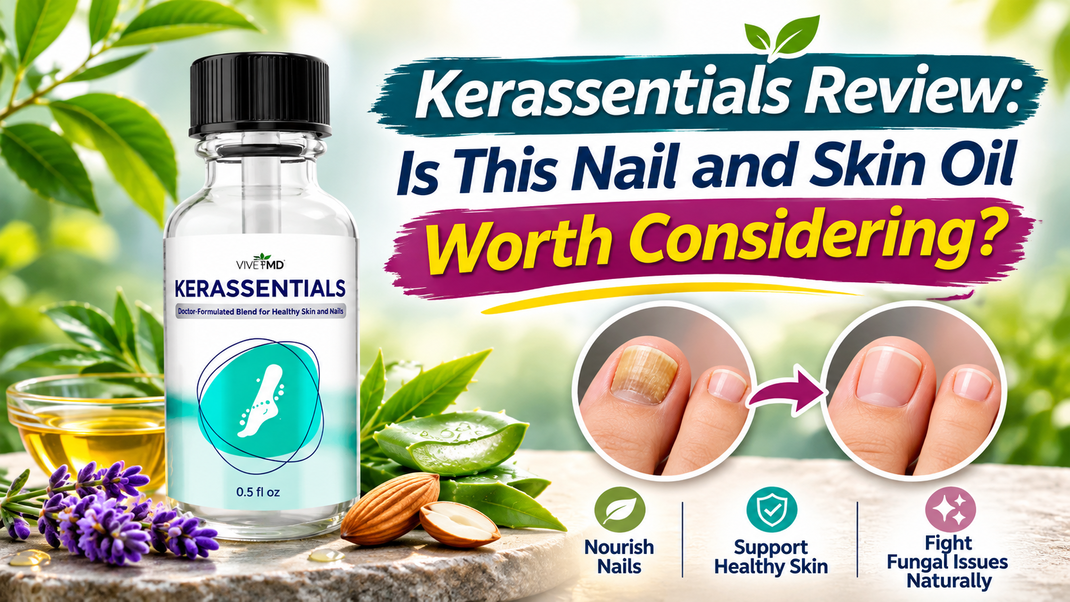
Kerassentials Review: Is This Nail and Skin Oil Worth Considering?
Yellowing toenails, brittle edges, thickened nails, or irritated skin around the toes can be surprisingly difficult to manage. Some people spend months trying different creams, oils, and home remedies without understanding why the problem keeps returning.
The frustration is understandable. Nails grow slowly, several conditions can cause similar symptoms, and a product that moisturizes damaged skin may not necessarily address an underlying fungal infection.
This is where Kerassentials enters the conversation.
Kerassentials is marketed as a doctor-formulated topical oil combining botanical ingredients, vitamin E, and undecylenic acid to support healthier-looking nails and surrounding skin. Its promotional materials emphasize natural ingredients, easy application, and support for people concerned about stubborn nail problems.
But the important question is not simply whether the ingredients sound promising. It is whether the complete formula has sufficient evidence to support its advertised benefits.
In this Kerassentials review, we’ll examine the ingredient list, what the research actually supports, possible limitations, safety considerations, and how the product compares with established approaches to fungal nail problems. The goal is to help readers make an informed decision—not to assume that every natural ingredient is effective or that every discolored nail needs antifungal treatment.
What Is Kerassentials?
Kerassentials is an externally applied nail and skin-care oil. Unlike an oral supplement, it is applied directly to the nails and surrounding skin.
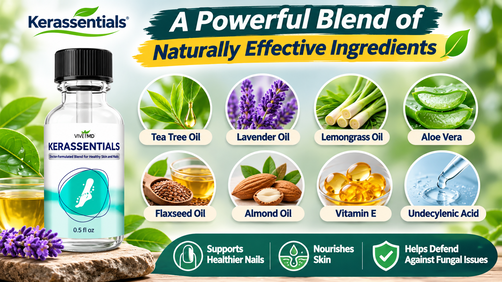
The advertised formula contains eight ingredients:
These ingredients serve different purposes. Some are commonly used for skin conditioning, while others have been investigated for antimicrobial or antifungal activity.
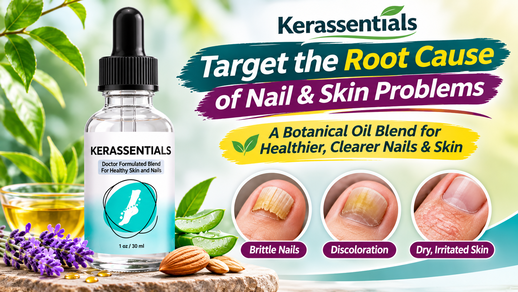
The product is positioned primarily for adults concerned about dry cuticles, brittle nails, discoloration, and maintaining a healthier nail-care routine. However, there is an important distinction between improving the appearance of nails and treating a diagnosed fungal nail infection. Those are not interchangeable outcomes.
Why Nail Problems Can Be Difficult to Resolve
Before assessing Kerassentials, it helps to understand why nail conditions often persist. Fungal nail infection, medically known as onychomycosis, can cause discoloration, thickening, brittleness, and separation of the nail from the underlying skin.
But fungal infection is not the only explanation. Repeated shoe pressure, nail injuries, psoriasis, and other nail disorders can produce similar changes. The American Academy of Dermatology explains that dermatologists may examine a nail sample to confirm whether fungus is actually present. aad.org
This matters because applying antifungal products to a nail that is damaged for another reason may accomplish very little. Another challenge is the structure of the nail itself. The nail plate is made of densely packed keratin, which can make delivery of topical ingredients difficult. Even established prescription nail treatments may require many months of consistent use. Visible improvement also depends on new nail growth.
For anyone researching Kerassentials, these two points are essential: identify the cause of the problem, and be realistic about how quickly nails can change.
How Does Kerassentials Work?
Kerassentials is promoted as a multi-ingredient topical formula combining oils with different skin-conditioning and antifungal-related properties. The proposed approach has three components.
First, skin conditioning. Almond oil, flaxseed oil, aloe vera, and vitamin E may help maintain moisture around the nails and reduce the dry, rough appearance of surrounding skin.
Second, ingredients with antifungal potential. Tea tree oil, lemongrass oil, and undecylenic acid have properties relevant to fungal research or antifungal formulations.
Third, regular topical application. The product is intended to be applied directly to the nail and nearby skin as part of an ongoing care routine.
These ideas provide a rationale for the formulation, but a plausible mechanism does not establish clinical effectiveness. For example, an ingredient may inhibit fungal growth in a laboratory experiment without achieving the same result when diluted, combined with other ingredients, and applied to a thick human toenail. The available product information does not establish that Kerassentials reliably penetrates infected nails or clears confirmed onychomycosis. That distinction should remain central to any fair assessment.
Kerassentials Ingredients: What Does the Research Say?
The ingredient list is arguably the most interesting part of Kerassentials. Rather than relying on one botanical extract, the formula combines several oils and skin-conditioning compounds. Still, the strength of evidence differs considerably between ingredients.
1. Tea Tree Oil
Tea tree oil, derived from Melaleuca alternifolia, is widely used in products marketed for skin and nail concerns. Laboratory studies have demonstrated antifungal activity, which explains its inclusion in many natural nail-care formulas. However, the National Center for Complementary and Integrative Health reports that research on tea tree oil for fungal nail infections remains too limited to establish effectiveness. NCCIH. For Kerassentials, tea tree oil is a scientifically relevant ingredient, but its presence does not prove that the complete formula eliminates nail fungus. It may also cause allergic skin reactions or irritation in some users.
2. Lavender Oil
Lavender oil is commonly associated with fragrance, aromatherapy, and skin-care products. Some laboratory research has investigated its antimicrobial and antifungal properties. However, evidence supporting lavender oil as an effective treatment for fungal nail infections in humans remains insufficient. Within Kerassentials, lavender oil is better understood as a botanical ingredient with potential skin-care properties rather than a clinically established nail fungus treatment. Its natural origin does not eliminate the possibility of sensitivity or contact dermatitis.
3. Organic Flaxseed Oil
Flaxseed oil contains fatty acids, including alpha-linolenic acid, an omega-3 fatty acid. In topical skin care, oils can help condition dry skin and reduce moisture loss. This may be useful for people whose cuticles or surrounding skin become rough, flaky, or uncomfortable. However, applying flaxseed oil to a nail should not be confused with taking omega-3 fatty acids orally. Claims that topical flaxseed oil strengthens skin immunity or eliminates nail fungus require substantially more evidence. Its most defensible role in this formulation is skin conditioning.
4. Almond Oil
Almond oil is a familiar ingredient in moisturizers, massage oils, and personal-care products. It functions primarily as an emollient, helping soften and condition the skin. For people experiencing dry cuticles or rough skin around the toenails, this may be a practical benefit. But almond oil has not been established as a reliable treatment for onychomycosis. People with almond or tree-nut allergies should examine the product label and seek medical advice before using an almond-containing topical preparation.
5. Lemongrass Oil
Lemongrass oil contains aromatic compounds, including citral, that have attracted attention in laboratory antimicrobial research. These findings provide a reason to investigate lemongrass oil further. However, laboratory antifungal activity is not the same as successful treatment of fungal infections beneath human nails. The effectiveness of lemongrass oil depends on factors such as concentration, formulation, exposure time, and whether enough active material reaches the affected tissue. It can also irritate sensitive skin.
6. Aloe Vera
Aloe vera is widely used in cosmetic products designed to moisturize and soothe skin. Its inclusion in Kerassentials makes sense from a skin-care perspective, especially for dry skin around the nails. However, aloe vera should not be viewed as a proven treatment for fungal nail infections. Its potential value lies primarily in supporting skin comfort and conditioning.
7. Tocopheryl Acetate (Vitamin E)
Tocopheryl acetate is a stable form of vitamin E frequently used in cosmetic formulations. It is valued for skin-conditioning properties and its role in antioxidant-related formulations. In Kerassentials, it may contribute to the product’s moisturizing and skin-care profile. However, there is insufficient evidence that applying vitamin E to infected toenails reliably restores damaged nail structure or removes fungal infection.
8. Undecylenic Acid
Undecylenic acid is particularly relevant because it has recognized antifungal applications in topical products. It is used in certain over-the-counter antifungal preparations for superficial skin infections, depending on the formulation and approved labeling. That makes it more directly relevant to antifungal care than ingredients included primarily for moisturizing purposes. However, an important limitation remains: an ingredient’s recognized antifungal use does not establish that every product containing it can treat nail fungus. The concentration, formulation, regulatory classification, and ability to penetrate the nail are all important. Without independently verified concentration information and clinical testing of the complete Kerassentials formula, its effectiveness against established onychomycosis cannot be determined.
Ingredient evidence summary
| Ingredient | Most relevant potential role | Evidence limitation |
|---|---|---|
| Tea tree oil | Antifungal activity in laboratory research | Limited clinical evidence for nail fungus |
| Lavender oil | Botanical skin care | No established nail fungus efficacy |
| Flaxseed oil | Skin conditioning | Not proven to eliminate nail fungus |
| Almond oil | Moisturizing dry skin | Not an established antifungal treatment |
| Lemongrass oil | Laboratory antimicrobial activity | Human nail-treatment evidence limited |
| Aloe vera | Skin soothing and moisturizing | Not a proven nail fungus treatment |
| Vitamin E | Skin conditioning | Nail restoration claims unproven |
| Undecylenic acid | Antifungal ingredient in certain topical products | Product-specific efficacy unknown |
The main takeaway: Kerassentials contains ingredients with plausible roles in nail and skin care, but the evidence for individual ingredients cannot be used as proof that the finished product treats fungal nail infections.
Does Kerassentials Really Work?
This is the most important question in any Kerassentials review. The answer depends on what someone expects the product to accomplish.
For moisturizing dry cuticles or conditioning surrounding skin, the formula contains ingredients commonly used for those purposes. It is reasonable to consider that such ingredients may help improve the feel or appearance of dry skin, although the degree of benefit from Kerassentials itself has not been established.
For brittle or discolored nails, the answer is less straightforward. These changes can result from fungal infection, physical damage, aging, psoriasis, or other conditions. An oil may improve surface appearance without correcting the underlying cause.
For confirmed fungal infection, the evidence is considerably weaker. I could not verify a published, peer-reviewed clinical trial demonstrating that the complete Kerassentials formula reliably cures onychomycosis. The American Academy of Dermatology also notes that small studies of natural remedies such as tea tree oil are insufficient to determine how effective they are for fungal nail infections. aad.org. That does not establish that Kerassentials has no effect. It means the clinical benefit remains uncertain. A scientifically responsible review must distinguish those two conclusions.
Kerassentials Benefits: What Is Realistic?
Based on the formulation, several potential benefits are worth discussing.
- • Skin moisture and conditioning: The oils and aloe vera may help soften dry skin around the nails.
- • A convenient nail-care routine: A topical oil can be incorporated into regular nail hygiene without taking oral medication.
- • Botanical formulation: People who prefer plant-derived ingredients may find the formula appealing, provided they understand that botanical does not automatically mean safer or more effective.
- • Antifungal-related ingredients: Tea tree oil and undecylenic acid provide a plausible rationale for investigating antifungal effects, although the complete product has not been shown to clear infected nails.
These are potential advantages—not guaranteed clinical outcomes.
How to Use Kerassentials
Kerassentials promotional materials describe applying the oil to the nails and surrounding skin using an applicator. However, instructions differ across websites advertising the product. Some describe daily use after showering, while another recommends multiple applications per day. Official Healthy Skin & Nails Formula+1
For that reason, follow the directions printed on the actual product packaging rather than assuming a particular frequency is correct. A sensible nail-care routine also includes keeping nails clean, drying the feet thoroughly, trimming nails carefully, and avoiding unnecessary irritation. Do not apply the oil to broken skin or use it more frequently than directed in an attempt to accelerate results. If a clinician has prescribed antifungal medication, do not replace that treatment with Kerassentials without discussing the change.
How Long Does Kerassentials Take to Show Results?
One reason nail products can be disappointing is that people expect visible changes much faster than nails can grow. Toenails grow slowly. Even after an infection has been successfully treated, it can take a year or longer for a healthy-looking nail to grow out completely. aad.org
This means an improvement in appearance is not necessarily immediate, and persistent discoloration does not always mean treatment has failed. However, that biological fact should not be used to justify using an unproven product indefinitely. There is no independently established treatment timeline for Kerassentials based on verified product-specific clinical trials. If symptoms persist or worsen, seeking an accurate diagnosis is more useful than repeatedly extending a self-treatment routine.
Kerassentials Side Effects and Safety Considerations
Kerassentials is applied externally, but topical products can still cause unwanted reactions. Essential oils may trigger redness, burning, itching, or allergic contact dermatitis. People with sensitive skin may react to botanical fragrances, even when a product is described as natural. Almond oil also deserves attention for users with relevant allergies.
Before using Kerassentials, examine the full ingredient label, avoid broken skin, and discontinue application if irritation develops. People with diabetes, poor circulation, weakened immunity, painful nail changes, or spreading skin inflammation should seek professional guidance rather than relying on cosmetic nail care alone. The CDC advises that fungal nail infections can spread to surrounding skin and that people with diabetes face particular concerns with recurrent infections. CDC
Important: Kerassentials should not be swallowed, and it should not be treated as a substitute for prescribed antifungal medication.
Kerassentials vs. Prescription Nail Fungus Treatments
A useful review should explain where the product fits among available options.
| Approach | Intended purpose | Evidence position |
|---|---|---|
| Kerassentials | Topical nail and skin conditioning; marketed for fungal concerns | Product-specific clinical effectiveness unverified |
| Prescription topical antifungals | Treat certain diagnosed fungal nail infections | Clinical evidence and established treatment protocols |
| Oral terbinafine | Treat confirmed fungal nail infections when appropriate | Established effectiveness; requires medical assessment |
| General moisturizing oils | Condition dry skin and cuticles | Useful for moisturizing, not proven to cure nail fungus |
Dermatologists may prescribe topical treatments such as efinaconazole, tavaborole, or ciclopirox for appropriate patients. Oral terbinafine is another established option, although it requires evaluation of possible side effects, interactions, and liver-related risks. aad.org. These treatments are not interchangeable with cosmetic oils. For someone with a confirmed fungal infection, selecting treatment according to the diagnosis is more important than choosing the product with the most attractive ingredient list.
Is Kerassentials FDA Approved?
Some Kerassentials marketing pages refer to manufacturing in an FDA-registered facility or to GMP-related quality standards. These statements should not be confused with FDA approval of the product. The FDA explains that facility registration and product listing do not mean a cosmetic product has been approved by the agency. FDA
I could not independently verify the advertised manufacturing certifications or establish that Kerassentials has FDA approval as a treatment for nail fungus. Consumers should request verifiable manufacturing details rather than relying solely on promotional badges.
Kerassentials Price, Availability, and Refund Policy
Kerassentials is advertised through online sales pages, with some marketing materials describing bundle discounts and a 60-day money-back guarantee. Doctor-Formulated Nail & Skin Health Oil
However, I found several similarly named websites with inconsistent product descriptions and usage instructions. That makes seller verification especially important. Before purchasing, confirm the seller’s identity, current price per bottle, quantity included, shipping charges, refund eligibility, return requirements, and customer-support contact details. Do not assume a refund guarantee covers every circumstance simply because it appears on a promotional page. The current checkout terms should take priority over statements made by third-party affiliates.
Kerassentials Pros and Cons
Potential advantages
- • Includes familiar skin-conditioning ingredients
- • Applied externally
- • Contains ingredients relevant to antifungal research
- • May fit into a regular nail-care routine
- • Advertised refund policy
Important limitations
- • No verified product-specific clinical trial identified
- • Not established as a nail fungus cure
- • Potential skin irritation or allergies
- • Ingredient concentrations not independently verified
- • Inconsistent instructions across marketing sites
Who Might Consider Kerassentials?
Kerassentials may interest adults looking for a botanical oil to condition nails and surrounding skin, particularly when dryness or cosmetic appearance is the primary concern.
However, people with thickened, yellow, painful, separating, or progressively damaged nails should consider medical evaluation before purchasing another antifungal-themed product. Someone with confirmed onychomycosis should prioritize evidence-based treatment rather than assume that a natural blend will be equally effective. The distinction is not about rejecting botanical products. It is about matching the product to the problem.
Frequently Asked Questions
Is Kerassentials a nail fungus treatment? ▼
Kerassentials is marketed for nail and skin health and fungal-related concerns. However, I could not verify clinical evidence establishing the complete formula as an effective treatment for diagnosed fungal nail infection.
Can Kerassentials improve yellow toenails? ▼
It may condition the nail surface and surrounding skin, but yellow discoloration can have several causes. The underlying condition determines whether cosmetic care is likely to help.
Does Kerassentials contain tea tree oil? ▼
Yes. Tea tree oil is included in the advertised ingredient list, alongside lavender oil, lemongrass oil, almond oil, flaxseed oil, aloe vera, vitamin E, and undecylenic acid.
Can Kerassentials replace prescription antifungal medication? ▼
No evidence establishes that it can provide equivalent treatment. Anyone prescribed medication for confirmed nail fungus should consult their clinician before making changes.
Is Kerassentials safe for daily use? ▼
Its safety depends on the formulation, application instructions, individual sensitivities, and existing skin conditions. Essential oils can cause irritation or allergic reactions.
Is Kerassentials worth buying? ▼
It may be worth considering as a cosmetic nail-conditioning oil if its price, ingredients, and seller information meet your expectations. It is a much less convincing purchase if the primary expectation is a clinically proven cure for fungal nail infection.
Final Verdict: Is Kerassentials Worth Considering?
Kerassentials combines several recognizable botanical oils with aloe vera, vitamin E, and undecylenic acid in a topical nail-care formula. There is a reasonable cosmetic rationale for ingredients intended to moisturize dry skin and condition the cuticle area. Some ingredients also have antifungal-related research behind them. However, ingredient potential is not the same as demonstrated product effectiveness.
The most significant limitation is the absence of independently verified clinical evidence showing that Kerassentials itself reliably treats fungal nail infections. For people mainly interested in routine nail and skin conditioning, the product may be an option to evaluate carefully. For people experiencing persistent discoloration, thickening, crumbling, pain, or suspected nail fungus, an accurate diagnosis and evidence-based treatment are more important.
Our Kerassentials review conclusion: Consider it a botanical nail-care product with unverified antifungal treatment benefits—not a proven alternative to medical treatment.
Research References
The following sources provide the clinical and regulatory context used in this review.
- American Academy of Dermatology — Nail Fungus: Diagnosis and Treatment
- NCCIH — Tea Tree Oil: Usefulness and Safety
- CDC — Treatment of Fungal Skin and Nail Infections
- American Academy of Dermatology — Choosing Wisely
- FDA — Cosmetic Facility Registration and Product Listing
- Kerassentials — Published Product and Ingredient Claims
Editorial disclosure: This is a research-based assessment of publicly available information, not a personal-use testimonial or independent laboratory test. Product claims have been established from research-based assessments. If affiliate links are added when publishing, include a clear affiliate disclosure near the beginning of the article. This content is educational and does not replace professional medical advice.