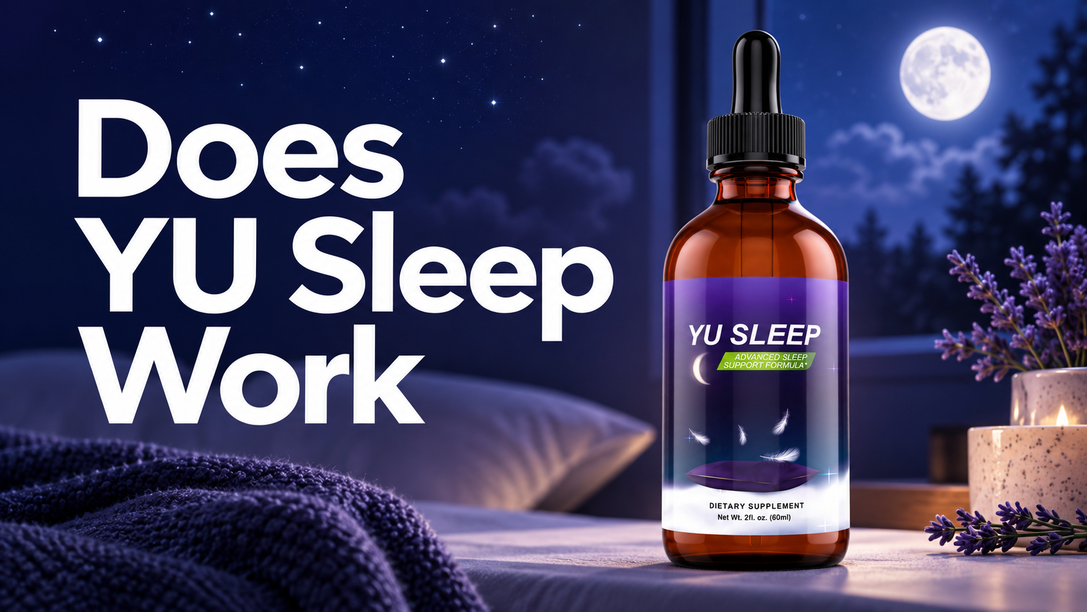
Does YU Sleep Work? Understanding How It Supports Sleep
You know that feeling: you are exhausted, your body is ready for bed, but your brain has apparently decided that 11:30 p.m. is the perfect time to replay every conversation you’ve had this week.
You check the clock.
You turn over.
You try to relax.
You check the clock again.
And somehow, another hour has disappeared.
For people dealing with occasional sleepless nights, difficulty winding down, or an overactive mind at bedtime, finding a sleep supplement that actually makes sense can be surprisingly difficult. There are hundreds of products promising deeper, longer and better sleep, but many rely on vague claims or extremely high doses of a single ingredient.
That brings us to an increasingly common question: Does YU Sleep Work?
YU Sleep takes a different approach. Instead of relying only on melatonin, its current formula combines melatonin with ingredients including L-theanine, magnesium glycinate, red tart cherry, lemon balm, apigenin, 5-HTP and GABA, along with vitamins B2 and B6.
The question, however, isn’t whether the ingredient list sounds impressive. The better question is whether there is credible science behind those ingredients and whether that science gives us a reasonable reason to expect YU Sleep to help.
The answer is nuanced.
YU Sleep has a scientifically plausible sleep-support formula, and several of its ingredients have human research behind them. However, that does not mean the complete YU Sleep formula itself has been clinically proven to treat insomnia.
Let’s look at what that actually means.
Does YU Sleep Work for Falling Asleep?
For many people, the biggest sleep problem isn’t staying asleep. It is getting from awake to asleep in the first place.
This is where YU Sleep’s combination of ingredients becomes particularly interesting.
The current formula provides 0.9 mg of melatonin per serving, according to the product’s current disclosure. It also contains a proprietary blend totaling 637 mg across seven ingredients.
Melatonin is not a traditional sedative. Your body naturally produces it as darkness approaches, helping regulate the body’s internal sleep-wake timing.
That distinction is important.
If someone expects melatonin to act like a knockout drug, they may be disappointed. Its primary role is more about providing a biological signal that it is nighttime.
Research suggests melatonin can help some people fall asleep faster, but evidence for chronic insomnia is considerably less impressive. The National Center for Complementary and Integrative Health notes that clinical guidelines have found insufficient evidence to recommend melatonin as a treatment for chronic insomnia.
So the melatonin in YU Sleep should be viewed as one part of the formula, not the entire solution.
And that is arguably one of the more sensible aspects of the product.
How Does YU Sleep Work?
Rather than targeting sleep through one mechanism, YU Sleep combines several ingredients associated with sleep timing, relaxation and nighttime support.
The formula includes:
- Melatonin – supports the body’s sleep-wake timing signal
- L-theanine – associated with relaxation and sleep-quality outcomes
- Magnesium glycinate – provides magnesium in a form commonly used in supplements
- Red tart cherry – a natural source of compounds associated with sleep
- Lemon balm – traditionally used for relaxation
- Apigenin – a plant flavonoid studied for calming properties
- 5-HTP – a precursor involved in serotonin production
- GABA – an inhibitory neurotransmitter involved in nervous-system signaling
- Vitamin B6 and B2 – essential vitamins involved in normal metabolic and neurological processes
The idea is relatively straightforward: instead of asking one ingredient to do everything, the formula provides several ingredients that may support different parts of the transition toward sleep.
That doesn’t automatically make it effective. But it does make the formulation scientifically more interesting than a product based entirely on a massive dose of melatonin.
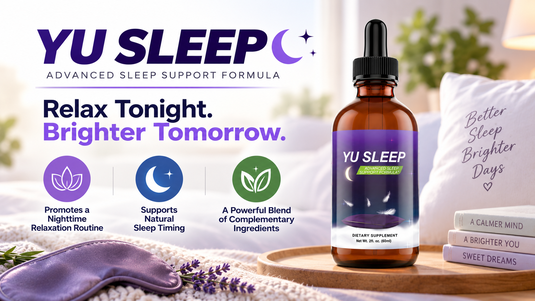
The Ingredient With Some of the Most Interesting Evidence: L-Theanine
If your problem at night is a mind that refuses to slow down, L-theanine is one of the ingredients worth examining closely.
L-theanine is an amino acid naturally found in tea. Research has investigated its effects on relaxation, stress and sleep.
A 2025 systematic review and meta-analysis examined 19 studies involving 897 participants. The researchers found statistically significant improvements in subjective sleep-onset latency, daytime dysfunction and overall subjective sleep quality among people receiving L-theanine-containing interventions.
That’s useful evidence.
But there is an important catch.
The researchers also pointed out that many of the studies used L-theanine alongside other ingredients, making it difficult to determine exactly how much of the observed effect came from L-theanine itself.
A separate systematic review published in 2026 looked specifically at standalone L-theanine supplementation and identified 13 trials involving 550 participants. It found promising evidence for sleep-related outcomes, with 200–450 mg/day appearing potentially useful for supporting healthy sleep in adults, while also calling for more high-quality research.
This is encouraging—but it doesn’t prove that YU Sleep produces those same results.
Why?
Because YU Sleep’s ingredients are contained within a proprietary blend, meaning the exact quantity of each component is not separately disclosed.
So when asking Does YU Sleep Work, L-theanine gives us a reason for optimism, but not a guarantee.
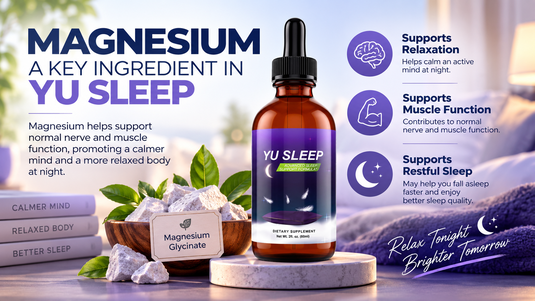
What Does Magnesium Bring to YU Sleep?
Magnesium is another popular ingredient in nighttime formulas, and there is a reasonable scientific basis for investigating it in relation to sleep.
Magnesium plays important roles in normal nerve and muscle function and participates in numerous biochemical reactions throughout the body.
Research on magnesium and sleep has produced mixed results, but some findings are encouraging.
A systematic review examining magnesium supplementation for insomnia in older adults found that magnesium supplementation was associated with a reduction in sleep-onset latency of approximately 17 minutes compared with placebo. However, the researchers rated the certainty of the evidence as low to very low and called for better-quality studies.
That is exactly the kind of evidence consumers should pay attention to.
It doesn’t mean magnesium is a sleeping pill.
It means there is some clinical evidence suggesting it may help certain aspects of sleep, while the overall evidence remains limited.
YU Sleep uses magnesium glycinate as part of its blend, giving the formula another ingredient with a plausible role in nighttime support.
What About Tart Cherry, Lemon Balm and Apigenin?
These ingredients are less famous than melatonin, but they are part of what makes the YU Sleep formula different from a basic melatonin supplement.
Red Tart Cherry
Tart cherries contain naturally occurring melatonin and polyphenolic compounds. Tart cherry products have been investigated for potential effects on sleep, although the available evidence isn’t strong enough to describe tart cherry as a proven insomnia treatment.
Its inclusion therefore makes sense as a complementary ingredient rather than a standalone solution.
Lemon balm
Lemon balm has a long history of traditional use for relaxation and calming.
Modern research has investigated its effects on stress and anxiety-related outcomes, but evidence specifically supporting sleep remains less extensive than the evidence surrounding ingredients such as melatonin.
Apigenin
Apigenin is a flavonoid found in several plants, including chamomile. It has attracted interest because of its potential calming properties.
Again, however, promising biological mechanisms should not be confused with proof that a particular dose will improve sleep in humans.
This is a recurring theme with supplements: interesting science is not the same thing as clinical proof.
Does YU Sleep Work Better Than Melatonin Alone?
This is one of the most important questions.
There is currently no good reason to claim that YU Sleep is definitively better than melatonin alone because there does not appear to be an independent randomized clinical trial directly comparing the current YU Sleep formula with melatonin alone.
What we can say is that YU Sleep is designed differently.
Instead of using melatonin as the sole active ingredient, it combines a relatively modest 0.9 mg melatonin dose with multiple additional ingredients intended to support relaxation and sleep.
That could make the product appealing to someone who feels that their problem isn’t simply a disrupted sleep schedule.
For example, imagine someone who gets into bed tired but spends 45 minutes thinking about tomorrow’s workload.
Melatonin may provide a nighttime signal.
But it doesn’t necessarily address the feeling of being mentally switched on.
That is where ingredients such as L-theanine and lemon balm become interesting.
This doesn’t prove that the combination will work better for every person. It simply explains the logic behind the formulation.
What Kind of Sleep Problems Might YU Sleep Help With?
If you’re searching for Does YU Sleep Work because you are desperate for a better night’s sleep, it helps to identify what is actually going wrong.
YU Sleep may be most relevant to people experiencing occasional or mild difficulty:
- winding down before bed
- falling asleep
- relaxing when the day is over
- maintaining a consistent nighttime routine
- switching from an active daytime mindset to sleep
However, persistent insomnia is different.
If you have been experiencing sleep difficulties regularly for weeks or months, taking a supplement without addressing the underlying cause may simply postpone the real solution.
Chronic insomnia can be associated with stress, anxiety, medications, medical conditions, sleep apnea, restless legs syndrome, irregular schedules and other factors.
In those situations, professional assessment is more appropriate than simply adding another supplement.
Does YU Sleep Work Immediately?
This is where expectations matter.
Some people may notice an effect relatively quickly from a nighttime supplement, particularly when the main issue is sleep timing or difficulty winding down.
Others may notice little or nothing on the first night.
That doesn’t necessarily mean the product has failed.
Sleep is affected by dozens of variables: caffeine intake, screen exposure, stress, exercise, bedtime consistency, room temperature, light exposure and even expectations about sleep.
If someone drinks three cups of coffee late in the afternoon, spends two hours scrolling through their phone in bed and then expects a supplement to override everything, the supplement has a difficult job.
A more realistic approach is to use a sleep supplement as part of a consistent nighttime routine.
The Most Important Limitation: YU Sleep Is Not a Clinically Proven Insomnia Treatment
This is probably the most important point in this entire review.
There is a difference between:
“The ingredients have scientific research behind them.”
and
“The finished product has been clinically proven to treat insomnia.”
Those statements are not interchangeable.
The research discussed above provides evidence for individual ingredients, particularly L-theanine and melatonin in certain contexts. But the current YU Sleep formula itself has not been established through a large, independent clinical trial showing that it treats insomnia.
That means claims such as “guaranteed deep sleep,” “works for everyone,” or “cures insomnia” would go beyond the available evidence.
A more honest assessment is that YU Sleep is a multi-ingredient sleep-support supplement built around ingredients with varying levels of scientific evidence.
That’s still meaningful.
But it’s not a medical treatment.
YU Sleep’s Proprietary Blend: What You Should Know
One criticism worth mentioning is the proprietary blend.
The current formula discloses the total weight of the seven-ingredient blend, but not the individual amounts of each ingredient.
From a consumer perspective, this makes it harder to compare the product with individual clinical trials.
For example, if a study finds that a particular amount of L-theanine may support sleep, knowing that YU Sleep contains L-theanine is useful—but knowing the exact amount would make the comparison much stronger.
This doesn’t mean the formula is ineffective.
It simply means there is a limit to how precisely we can connect the product’s label with individual research findings.
Transparency matters, especially when consumers are trying to make evidence-based decisions.
Potential Benefits of YU Sleep
Looking at the formula as a whole, the potential advantages include several areas.
A nighttime relaxation routine
Taking a dedicated nighttime formula can help create a consistent behavioral cue that the day is ending.
Sleep-timing support
The inclusion of melatonin gives the formula a direct connection to the body’s circadian system.
Multiple complementary ingredients
Instead of depending exclusively on one ingredient, YU Sleep combines ingredients associated with relaxation, sleep timing and nutritional support.
L-theanine research
Recent systematic reviews provide encouraging evidence that L-theanine may improve certain subjective measures of sleep quality and sleep onset.
Convenient liquid format
For people who dislike swallowing several capsules before bed, a liquid formula can be convenient.
Are There Any Reasons Not to Use YU Sleep?
Yes.
“Natural” does not automatically mean “risk-free.”
Melatonin can interact with certain medicines, and long-term safety data are less established than short-term use. NCCIH recommends that people taking medications consult their healthcare provider before using melatonin supplements.
The inclusion of 5-HTP is another reason to be cautious if you take medication that affects serotonin.
Pregnant or breastfeeding individuals, people managing medical conditions, and anyone taking prescription medication should speak with a qualified healthcare professional before using a multi-ingredient sleep supplement.
And if your sleep problems are persistent, severe or accompanied by loud snoring, gasping, breathing interruptions or significant daytime exhaustion, a sleep evaluation may be more valuable than another supplement.
Does YU Sleep Work for Everyone?
No sleep supplement works for everyone.
That isn’t a criticism of YU Sleep. It is simply how sleep works.
One person may struggle because their circadian rhythm is shifted.
Another may have stress-related insomnia.
Someone else may have sleep apnea.
Another person may simply be consuming caffeine too late.
These problems require very different solutions.
This is why the best way to think about YU Sleep is as sleep support, not as a universal cure for every sleep problem.
If your sleep difficulty is occasional and you are primarily looking for help winding down, the formula is more relevant.
If you have persistent insomnia, you should investigate the underlying cause.
How to Get the Most From a Sleep Supplement
Even a well-designed sleep supplement cannot compensate for poor sleep habits.
If you’re trying YU Sleep, combine it with basic sleep practices:
Keep a consistent bedtime. Your body responds well to predictable timing.
Reduce bright light at night. Light exposure can interfere with the biological signals associated with nighttime.
Watch caffeine. Afternoon and evening caffeine can remain active for hours.
Keep your bedroom comfortable. A cool, quiet and dark environment can make falling asleep easier.
Stop treating your phone like a bedside entertainment system. Scrolling until the exact moment you close your eyes isn’t exactly a strong signal that the day is over.
Give your routine time. One bad night doesn’t tell you much about whether a sleep strategy is useful.
Final Verdict: Does YU Sleep Work?
So, after looking at the ingredients, available research and the limitations, does YU Sleep work?
The most accurate answer is:
YU Sleep has a credible ingredient profile that may help some people with relaxation and sleep support, but the complete formula has not been independently proven to treat insomnia.
Its strongest feature is the combination of ingredients rather than any single “miracle” component.
The 0.9 mg of melatonin provides a sleep-timing component, while L-theanine has increasingly interesting human research behind it. A 2025 meta-analysis involving 897 participants found improvements in several subjective sleep measures, while a later systematic review of 13 standalone L-theanine trials involving 550 participants also reported promising findings.
Magnesium, tart cherry, lemon balm, apigenin, GABA and 5-HTP add further components to the formula, although the evidence supporting each ingredient is not equally strong.
The biggest limitation is the lack of direct clinical evidence on the complete current YU Sleep formula and the use of a proprietary blend that does not disclose the individual quantities of several active ingredients.
So if you’re asking Does YU Sleep Work because you want an honest answer before spending money, here’s the bottom line:
It is reasonable to consider YU Sleep as a sleep-support supplement, particularly if your main challenge is winding down or falling asleep. Its ingredients are not simply random additions to a bottle; several have scientific research supporting potential sleep or relaxation benefits. But it should not be presented as a proven cure for chronic insomnia.
For someone who occasionally lies awake wishing their brain had an “off” button, YU Sleep may be worth considering as one part of a broader sleep routine.
For someone dealing with persistent insomnia, the smarter first step is identifying why sleep is difficult in the first place.
Because sometimes better sleep isn’t about finding a stronger sleep aid.
It’s about finding the right reason you’re not sleeping—and then addressing it.