
Joint Genesis Reviews: When Does Joint Support Become Worth Paying Attention To?
Joint Genesis reviews are often searched by people who have started noticing changes in the way their joints feel or simply want to be more proactive about maintaining mobility as they get older. That raises a more useful question than whether one supplement is “good” or “bad”: when does joint support become something worth paying attention to? Age, activity level, previous injuries, body weight, genetics, and everyday physical demands can all influence joint health, so there is no single age at which everyone suddenly needs a supplement. However, for many people, the years after 40 can be a reasonable time to become more deliberate about protecting mobility and maintaining healthy habits.
Why Joint Support Becomes More Relevant After 40
Getting older does not automatically mean developing joint problems. Plenty of people remain active and comfortable well into their 50s, 60s, and beyond.
What does change is the amount of attention many people need to give their musculoskeletal health.
Joints are used every day. Walking, climbing stairs, exercising, lifting objects, standing for long periods, and even repetitive movements at work all place mechanical demands on the body. Previous injuries can add another layer of stress, while reduced muscle strength or inactivity may change how loads are distributed around a joint.
Osteoarthritis is also more common with increasing age. It involves changes in cartilage and other joint tissues and can lead to stiffness, pain, swelling, and difficulty moving. Risk is also influenced by factors such as previous joint injury, body weight, and family history.
This is why thinking about joint health before significant problems develop can be more sensible than waiting until everyday movement becomes difficult.
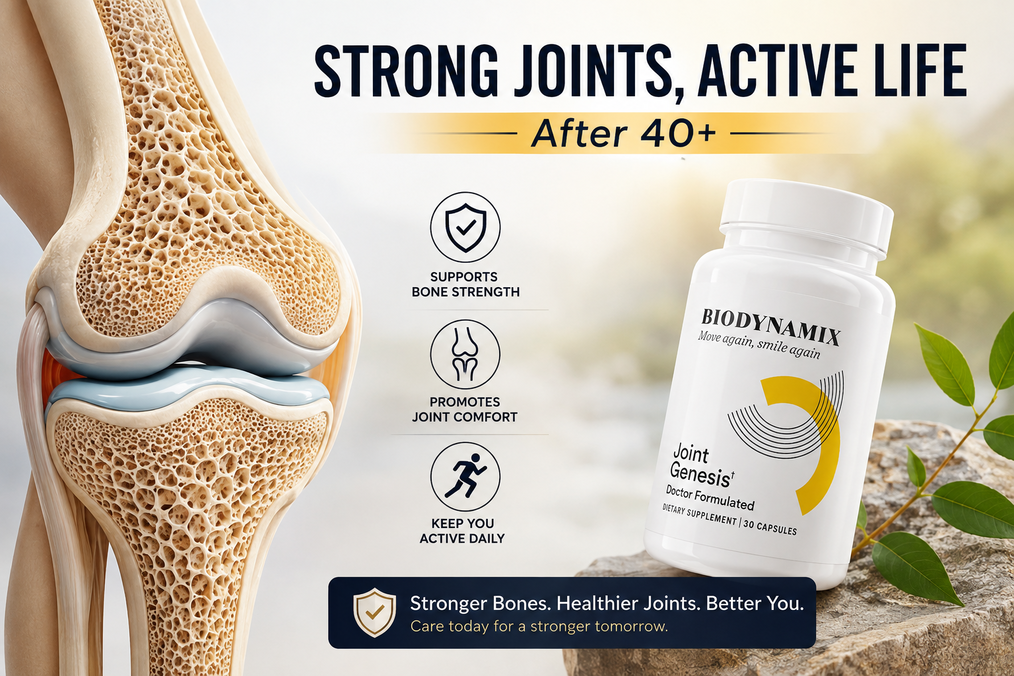
You Do Not Have to Wait Until Your Joints Hurt
One common misconception is that joint pain supplements are only relevant once someone has noticeable joint pain.
That is not necessarily the best way to think about nutritional support.
There is an important difference between managing an existing joint condition and paying attention to general joint health.
Someone who has no significant symptoms may still want to maintain an active lifestyle, support normal mobility, and establish good habits before age and inactivity begin to take a greater toll.
That does not mean everyone over 40 needs a supplement. It simply means this can be a useful stage of life to look at the bigger picture: exercise, body weight, nutrition, recovery, and whether additional nutritional support is appropriate.
The evidence surrounding joint supplements is also not uniform. Research on several popular joint ingredients has produced mixed findings, so supplements should be viewed as one possible part of a broader health routine rather than a guaranteed solution.
What Can Make Someone Consider Joint Support?
There are several practical situations in which people begin researching products such as Joint Genesis.
1. Everyday stiffness starts becoming noticeable
Perhaps the first sign is not pain at all.
It might be feeling stiff after sitting for a long time, taking a little longer to loosen up in the morning, or noticing that getting up after a long car journey is not as effortless as it once was.
Occasional stiffness does not automatically indicate a serious joint problem. However, repeated changes in mobility are worth paying attention to rather than simply dismissing them as “getting older.”
2. Physical activity becomes harder to maintain
Another signal can be a gradual reduction in activity.
Someone who previously walked every day may start walking less because their knees feel uncomfortable. Someone who enjoyed gardening, cycling, hiking, or recreational sports may begin avoiding those activities.
This can create an unfortunate cycle. Less movement can contribute to weaker muscles, while weaker supporting muscles can make everyday movement more demanding.
Exercise remains an important part of maintaining joint function. The American College of Rheumatology recommends exercise for people with osteoarthritis and notes that appropriate physical activity can improve symptoms, movement, strength, and daily function.
3. You have become more aware of recovery
Recovery can also become more important with age.
After a demanding workout, a long walk, or a physically active weekend, some people notice that their body does not bounce back quite as quickly as it once did.
This does not necessarily mean something is wrong. It may simply be a reason to pay more attention to sleep, hydration, nutrition, stretching, resistance training, and appropriate rest.
A joint supplement cannot replace recovery habits. But someone who is already taking care of the basics may reasonably investigate whether nutritional support has a place in their routine.
Why Consistency Matters More Than Taking Something Occasionally
This is one of the less discussed aspects of supplements.
People sometimes expect immediate results from a product they take for joint support. When they do not notice an obvious change within a few days, they stop.
That approach can make it difficult to determine whether a supplement is actually useful for them.
Dietary supplements are generally intended to complement regular nutrition, not function like an instant pain reliever. How long someone should use a particular product depends on the product, its instructions, the person’s circumstances, and the reason they are considering it.
For that reason, anyone using Joint Genesis should follow the product’s current label instructions rather than experimenting with the amount or frequency.
Consistency also applies to the rest of the routine. Taking a supplement while remaining completely inactive, sleeping poorly, or ignoring persistent joint symptoms is unlikely to address the bigger picture.
When Is the Best Time to Take Joint Genesis?
This is one of the questions people commonly have when looking at Joint Genesis reviews.
The practical answer is to follow the current directions on the product label. The exact timing should not be changed simply because someone online recommends taking a supplement at a particular hour.
If the label instructs users to take the capsules with food, following that instruction is more important than trying to find a supposedly “perfect” time of day.
For people who take several medications or supplements, establishing a consistent routine can also make it easier to remember everything correctly.
A useful habit is connecting the supplement with an existing daily routine, such as breakfast or another regular meal, provided that this matches the product’s instructions.
The goal is not to create a complicated schedule. It is to make responsible use easier to maintain.
Should You Take a Joint Supplement Every Day?
That depends on the specific product and its directions.
A supplement should not automatically be taken more frequently because someone believes that more will produce faster results. Increasing the amount without guidance can create unnecessary risk.
It is also worth remembering that supplements are not substitutes for medical treatment. If someone has persistent pain, swelling, reduced movement, weakness, or symptoms following an injury, the better first step is identifying the underlying problem.
The existing discussion around joint supplements emphasizes the same principle: ingredients can have different levels of evidence, and research does not automatically establish that every finished supplement will produce the same results.
What Does Joint Genesis Actually Add to a Joint Health Routine?
This is where it helps to keep expectations realistic.
Joint Genesis should not be viewed as something that allows a person to ignore exercise, diet, weight management, or professional medical advice.
Instead, someone considering it may see the supplement as one additional part of a broader approach to maintaining joint health.
Think about the routine as a group of pieces:
- Regular movement
- Appropriate strength training
- A balanced diet
- Healthy body weight where appropriate
- Adequate rest and recovery
- Injury prevention
- Appropriate medical care
- Nutritional supplementation when it makes sense
A supplement sits near the end of that list rather than replacing everything above it.
Exercise, in particular, has an important role. Strengthening exercises can improve muscle strength and bone strength while helping support joints and reduce stress placed on them. Walking, swimming, cycling, flexibility work, and balance exercises can also be useful depending on a person’s abilities and condition.

Why Waiting for Severe Problems May Not Be the Best Strategy
There is a tendency to treat joint health as something to worry about only after serious discomfort appears.
But prevention and early attention are generally easier than trying to rebuild a routine after mobility has already declined.
Consider someone in their early 40s who notices that they are becoming less active. Instead of waiting another decade, they could use that realization as a reason to strengthen their legs, improve their diet, manage body weight, and pay closer attention to joint health.
That does not guarantee that joint problems will never occur. It simply puts the person in a better position to maintain physical function.
For weight-bearing joints, body weight can also influence mechanical stress. Clinical guidance for osteoarthritis supports weight management when someone is overweight or obese, particularly alongside exercise.
Joint Support Is About More Than the Knees
When people hear “joint health,” they often immediately think about the knees.
But joints throughout the body deserve attention.
The hips, hands, shoulders, ankles, elbows, and spine all contribute to movement and daily function. The demands placed on each area vary depending on someone’s occupation, hobbies, exercise routine, and previous injuries.
Someone who spends hours typing may have different concerns from someone who works on their feet. A recreational runner has different mechanical demands from someone who spends most of the day sitting.
This is another reason a general joint-health strategy is more useful than focusing exclusively on one symptom.
What If You Already Have Joint Problems?
This is where expectations need to be particularly realistic.
A supplement should not be used as a replacement for diagnosis or treatment.
Persistent joint symptoms can have many causes, including osteoarthritis, injury, inflammation, overuse, and other medical conditions. Correctly identifying the cause matters because treatment depends on the underlying problem.
Someone experiencing ongoing swelling, substantial pain, loss of movement, unexplained weakness, or rapidly worsening symptoms should seek appropriate medical evaluation.
The same applies to symptoms that appear after a significant injury.
Joint Genesis may be something a person researches as nutritional support, but it should not become a reason to postpone professional care.
A Note About Expectations From Joint Genesis Reviews
Online reviews can be useful, but they should be read carefully.
One person’s experience is not proof that another person will experience exactly the same result. Factors such as age, activity level, diet, existing health conditions, medications, and expectations can all influence how someone responds to a supplement.
The supplied background material makes this point clearly: individual experiences can differ, and testimonials cannot establish that the same outcome will occur for everyone.
That is why a good review should provide information rather than simply tell the reader what conclusion to reach.
What Should You Look at Before Starting?
Before adding Joint Genesis or another joint supplement to your routine, consider a few basic questions.
- Why am I considering it?
Is the goal general joint support, maintaining an active lifestyle, or addressing a specific concern? - What else am I doing for my joints?
Look honestly at your activity level, diet, strength, sleep, and body weight. - What medications am I taking?
Supplements can interact with medications. For example, some commonly studied joint supplements may interact with warfarin, so people taking prescription medicines should discuss supplement use with an appropriate healthcare professional. - Do I have symptoms that need medical attention?
If the answer is yes, diagnosis should come before relying on a supplement. - Am I prepared to use it consistently according to the label?
This matters more than constantly changing products or schedules.
Joint Genesis Reviews: The Bigger Picture
The most useful way to approach Joint Genesis reviews is not simply by asking, “Will this work for me?” When researching joint health, many people also ask, “Is hyaluronic acid good for joints?” Understanding its role in joint lubrication and the evidence behind different treatments can help you make a more informed decision.
A better set of questions is: Is joint support relevant to my current lifestyle? Am I taking reasonable steps to protect my mobility? What does the product actually contain? How should it be used? Are there safety considerations for me? And what does the available evidence really tell us?
Those questions lead to a much more informed decision.
For anyone who wants the product-specific information—such as its formulation, ingredients, usage details, and other considerations—we have already published a detailed Joint Genesis review that goes deeper into those areas.
Final Thoughts
Joint health becomes increasingly worth paying attention to as people move through their 40s and beyond, but there is no magic age at which everyone suddenly needs a supplement.
The more useful approach is to notice changes early, stay physically active, maintain a healthy lifestyle, and understand where nutritional support might fit into the picture.
Joint Genesis can be considered as part of that broader approach, but it should not be viewed as a replacement for exercise, balanced nutrition, healthy weight management, or appropriate medical care.
If you are researching the product and want the detailed product-specific information before making a decision, our Joint Genesis reviews article provides a deeper examination of the formula and other important considerations.
Ultimately, the goal is not simply to take another supplement. It is to protect the mobility and independence that make everyday life easier—from walking and climbing stairs to exercising, traveling, working, and enjoying the activities you want to continue doing.